
Choose a Georgia pest control company by asking seven questions before you sign anything, and by paying closest attention to three of the answers. What does the guarantee actually promise? Which pests does the standard plan actually cover? How fast can a technician actually be at your door? Companies that answer all three plainly are the ones worth hiring.
October is when this decision matters most. Rodents and wildlife are moving into Georgia attics and crawl spaces, and the company you pick now is the one you’ll rely on all winter.
This guide gives you the seven questions, explains what a real guarantee looks like, lays out what standard plans include and leave out, and shows how Arete answers each question. If you would rather skip to the quote, request a free inspection and ask these questions on the call.
The 7 Questions to Ask Before You Hire
These seven questions take five minutes to ask, and the answers tell you nearly everything you need to know. Ask every company the same ones so the responses line up.
| Question | What a Good Answer Sounds Like |
| 1. What does your guarantee cover? | Free re-treatment between visits if pests return, in writing |
| 2. Which pests are included in the standard plan? | A specific list, including the ones that commonly get excluded |
| 3. How fast can you be here? | Same-day or next-day for urgent problems |
| 4. Do you inspect before quoting? | Yes, a technician looks at the property first |
| 5. Who will treat my home? | Licensed, local technicians who work your area regularly |
| 6. What happens between quarterly visits? | Re-service at no charge if anything shows up |
| 7. How do you handle rodents and wildlife? | Inspection, exclusion, and sealing, not just traps |
The first three questions carry the most weight because companies differ most here, and homeowners most often get surprised later. The sections below take each of those three apart.
What “Guaranteed” Should Actually Mean
Nearly every pest control company says its work is guaranteed. The word means very different things depending on who is saying it.
A real guarantee means free re-treatment. If ants show up three weeks after a quarterly visit, a technician comes back and treats them at no charge, and that promise is written into the service agreement rather than offered verbally on the phone. The guarantee should also hold for the full term of the plan, not just the first thirty days.
A weak guarantee usually hides behind qualifiers. Watch for guarantees that only apply to the specific pest named on the first visit, that charge a trip fee for re-service, or that quietly exclude the pests most likely to come back. If the rep cannot tell you in one sentence what happens when pests return, the guarantee is not doing much.
Arete’s plans carry a 100% satisfaction guarantee with free re-treatments, and that applies across every tier.
Coverage: What Standard Plans Include and Exclude
The second surprise homeowners run into is coverage. Many companies sell a standard plan that covers ants and spiders, then charge extra for the pests Georgia homes actually struggle with. Read the pest list before you compare prices, because two plans at the same price can cover very different things.
| Pest | Typical Standard Plan | Arete Standard Plan |
| Ants, spiders, crickets, earwigs | Included | Included |
| Fleas and ticks | Often excluded | Included |
| German roaches | Often excluded | Included |
| Fire ants | Often excluded | Included |
| Termites | Separate contract | Pest+ and Elite+ plans |
| Mosquitoes | Separate add-on | Elite+ plan |
| Bed bugs | Separate service | Separate service |
| Rodents and wildlife | Separate service | Separate service with exclusion |
The pattern to notice is in the middle rows. Fleas, ticks, German roaches, and fire ants are among the most common pest calls in Georgia, and they are exactly the pests many standard plans leave out. Arete’s approach is to leave no pest behind, so the base plan covers those four rather than selling them separately.
Termites, mosquitoes, bed bugs, and rodents are largely separate everywhere because each requires specialized work. A quarterly residential protection plan handles the everyday pests, and the specialized services bolt on when needed.
Same-Day vs. Scheduled Service
The third question separates companies by how they treat an urgent problem. Scheduled quarterly visits are the backbone of any plan, but pests do not keep a calendar.
A company built for Georgia homeowners offers same-day or next-day service when something flares up, whether that is a wasp nest over the door, a trail of ants in the kitchen, or scratching in the attic. Quarterly visits handle prevention, and fast response handles the surprises in between. A company that can only fit you in two weeks from now is asking you to live with the problem.
Ask specifically about the response window for an active rodent sighting in October, since that is the call most Georgia homeowners end up making this time of year.
Red Flags to Avoid
A few warning signs reliably predict a poor experience, and they all show up before you sign.
Be cautious of a firm price quoted over the phone with no inspection, since the price has to be guessed and tends to grow later. Be wary of a guarantee you can’t explain in a sentence, a pest list that is vague or missing from the paperwork, and any company that pressures you to sign on the first call. A technician who sprays and leaves without walking the property is a sign of a company selling applications, not results.
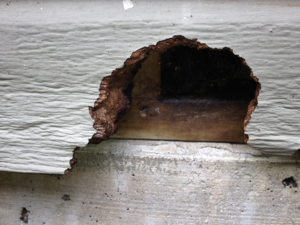
Finally, be careful with rodent work that consists only of traps. Traps catch the animals already inside. Without exclusion, which means sealing the gaps they used to get in, the next ones follow the same route.
How Arete Answers Each Question
It is fair to ask how the company writing this guide measures up, so here is how Arete answers the seven questions.
The guarantee is 100% satisfaction with free re-treatments, in writing, across every plan. The standard plan covers ants, spiders, crickets, and earwigs plus the pests others exclude, including fleas, ticks, German roaches, and fire ants. Same-day and next-day service is available for urgent problems across metro Atlanta and North Georgia, and every quote follows a free inspection.
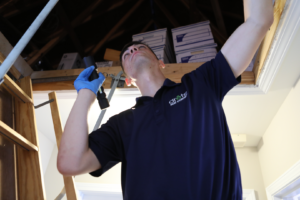
Technicians are licensed and local, working the same neighborhoods week after week. Between quarterly visits, re-service is free. Each visit includes a de-webbing pass on the eaves with product applied to the brush so spiders and wasps do not rebuild, and a granular treatment that extends about fifteen feet out from the foundation so pests are stopped in the soil before they reach the house.
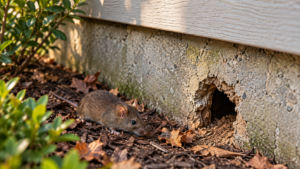
For rodents and wildlife, the work starts with an inspection to find entry points, continues with exclusion to seal them, and finishes with trapping and follow-up. That is the order that keeps animals out rather than catching them one at a time.
Why October Is the Month to Decide
Pest control hiring in Georgia peaks in fall for a simple reason. Nights cool in October, and mice, roof rats, squirrels, and raccoons all start looking for a warm attic. The Centers for Disease Control notes that rodent infestation in and around the home is the main way rodent-borne disease spreads to people, which is a strong argument for sealing them out before they settle in.
The company you hire now is the one handling that migration. Choosing on the basis of guarantee, coverage, and response time, rather than the lowest phone quote, is how you end up with a home that stays quiet through winter.
Choose on Guarantee, Coverage, and Speed
Picking a pest control company in Georgia comes down to seven questions, and the three that matter most are what the guarantee promises, which pests the plan covers, and how fast help arrives.
Get those answers in writing, skip phone quotes and vague pest lists, and choose the company that inspects first and seals rodents out rather than trapping them one by one.
Ask the questions on the call. A good company will be glad you did. The questions below cover what Georgia homeowners ask most.
FAQs
What should I ask a pest control company before hiring?
Ask what the guarantee covers, which pests the standard plan includes, how fast they can come, whether they inspect before quoting, who the technicians are, what happens between visits, and how they handle rodents and wildlife.
What does a pest control guarantee usually cover?
A real guarantee means free re-treatment if pests return between scheduled visits, written into the agreement for the full plan term. Weak guarantees hide behind trip fees, short windows, or excluded pests.
Are fleas, ticks, and fire ants included in standard pest control?
Often not. Many standard plans exclude them and charge extra. Arete’s standard plan includes fleas, ticks, German roaches, and fire ants alongside ants and spiders.
Should I pick a company that offers same-day service?
Yes, if you want urgent problems handled quickly. Quarterly visits cover prevention, but same-day or next-day response is what handles a wasp nest or rodent sighting between visits.
Is the cheapest pest control quote the best deal?
Rarely. Phone quotes with no inspection tend to grow, and low-priced plans often exclude the pests Georgia homes actually fight. Compare guarantees and pest lists before comparing price.
How do I know if a company handles rodents properly?
Ask whether the work includes exclusion, meaning sealing entry points, not just trapping. Traps catch what is inside; exclusion keeps the next animals out. Contact Arete Pest Control for a free inspection.