
The most effective ways to get rid of spiders in Utah are to knock down webs, eliminate insects that sustain them, and reduce exterior lighting that attracts them.
Spiders are the most common insect found in homes across the United States, as scientists estimate that you’re never more than a few feet away from a spider at any given time.
Utah’s high-desert climate provides ideal conditions for a host of different spider species, including scorpions, yellow sac spiders, hobo spiders, wolf spiders, and even the venomous black widow spider.
Despite their ubiquity, there are many steps homeowners can take to reduce the spider population in their homes and avoid painful, potentially venomous stings.
Between basic prevention methods like sealing entry points and enrolling in professional spider control programs, this guide will provide five expert tips to get rid of spiders in your Utah home and yard.
Common Indoor Spiders in Utah
The most common indoor spiders in Utah include the western black widow, hobo spider, yellow sac spider, wolf spider, cellar spider, and American house spider.
While most of these species are harmless, identifying them by their web shapes, body markings, and preferred nesting locations allows homeowners to distinguish beneficial household guests and venomous spiders.
Western Black Widow (Latrodectus hesperus)
The western black widow is the most venomous spider in Utah and in North America.
The female is venomous and easily identifiable by her glossy black body with a distinctive red hourglass marking on the underside of her abdomen.
Males are smaller, often with red or yellow markings on the abdomen, and are not medically significant.
Black widows are nocturnal, building irregular three-dimensional webs in dark, undisturbed areas at or near ground level.
Hobo Spider (Eratigena agrestis)
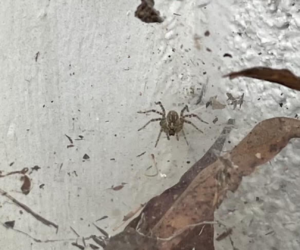
Hobo spiders are part of the funnel-web spider family and build flat, non-sticky funnel-shaped webs at ground level in rock crevices, window wells, and along foundation lines.
Their bodies are brown with darker brown markings on the cephalothorax and a grey abdomen with yellowish banding that is difficult to see without close inspection.
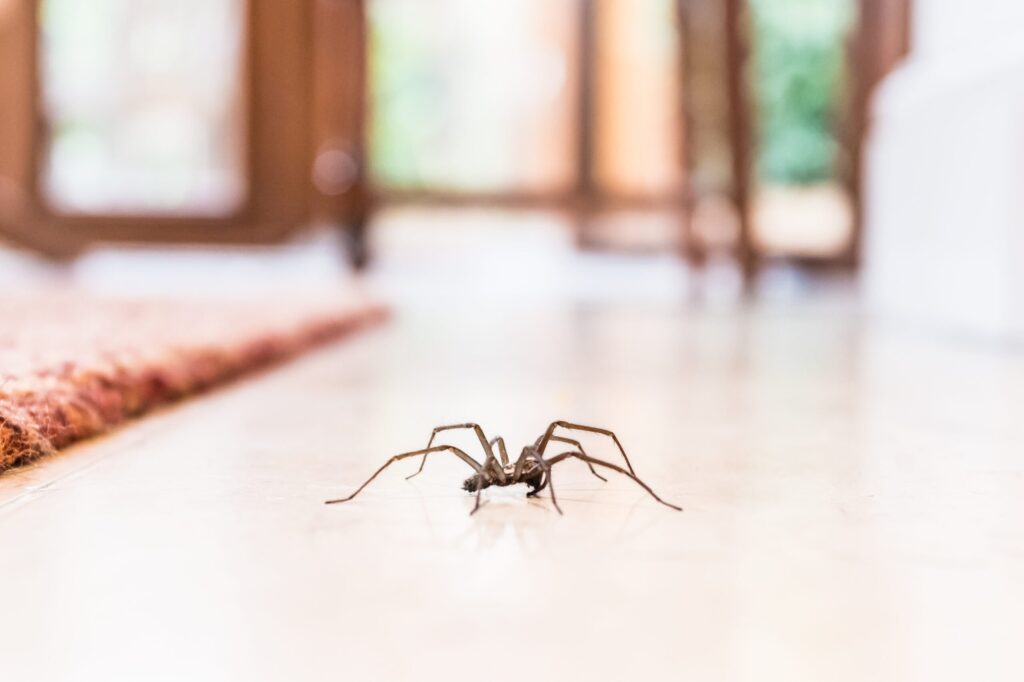
Hobo spiders have no banding or rings on their legs, which distinguishes them from several similar-looking but harmless species, including the giant house spider.
Yellow Sac Spider (Cheiracanthium inclusum)
Yellow sac spiders are small, pale yellow to cream-colored pests that do not spin hunting webs.
Instead, they build small, silken-sack shelters behind picture frames, or inside undisturbed your shoes.
Since they nest where humans routinely reach, they are one of the most frequent biters in Utah.
Their painful bite causes a sharp sting and a red welt that occasionally develops a localized, slow-healing sore—a reaction frequently misattributed to the brown recluse, a species not established in Utah.
Wolf Spider (Lycosidae)
Wolf spiders are large, hairy, grey-to-brown ground hunters that do not spin webs.
Instead, they rely on their eyesight and speed to chase down prey.
Growing up to 1.5 inches in body length, they frequently wander into Utah homes during the fall in search of warmth or insects, entering through gaps under doors.
Despite their intimidating size and appearance, wolf spiders are non-aggressive, functionally harmless, and deliver a rare, mild bite comparable to a bee sting.
Cellar Spider (Pholcus phalangioides)
Cellar spiders, often called “daddy longlegs,” are pale tan, delicate insects characterized with long, thin legs.
They build loose, messy webs in basement corners, crawl spaces, and ceilings, and will vibrate violently when disturbed to confuse predators.
Cellar spiders act as natural pest control by actively consuming nuisance flies, mosquitoes, and even dangerous species like black widows.
American House Spider (Parasteatoda tepidariorum)
The American house spider is the most common web-building species found inside Utah residences.
These spiders have rounded, mottled brown bodies under half an inch long and spin classic, tangled cobwebs in quiet window frames, attics, and basements.
They pose zero health threats to humans.
However, a sudden surge in the American house spider population is a strong indicator of a larger underlying insect infestation that is providing them with abundant food.
How to Get Rid of Spiders in Your Utah Home
Eliminating spiders from your Utah home starts with proper identification.
Once you know what species you are dealing with, you can attack it based on where it nests and what it feeds on to survive.
1. Remove Outdoor Harborage Near the Foundation
Ground-dwelling spiders, including black widows, hobo spiders, and wolf spiders, establish outdoor nests before infiltrating your home.
To break this migration cycle, focus on the immediate perimeter of your foundation
- Trim vegetation back from exterior walls: Keep shrubs, ground cover, and low-growing plants at least 12 to 18 inches from the foundation. Dense vegetation around your foundation is the most common nesting site for indoor spiders before they migrate indoors.
- Relocate woodpiles: Firewood stacked against the exterior wall can attract spiders and other insects, including termites. Move woodpile storage at least 20 feet from the structure, elevated off bare soil on concrete blocks or a metal rack.
- Clear rock piles and ground debris: Clear and relocate any ground-level debris that has been undisturbed for weeks or more, including leaf and rock piles.
- Check window wells: Inspect and clear them seasonally, and consider adding well covers to prevent ground-level access.
2. Seal Structural Entry Points
Most residential spider infestations occur in the fall when ground-dwelling pests slip through tiny foundation and door gaps to escape dropping temperatures.
To keep them out, inspect all exterior doors and replace worn door sweeps that allow light to leak through.
Pay close attention to garage doors, replacing the bottom rubber seals if they no longer rest flat against the floor.
Use premium exterior caulk or heavy copper mesh to seal gaps around plumbing, HVAC, and electrical conduits in your foundation stem wall.
For brick homes, fit the ventilation weep holes with specialized wire-mesh inserts that allow airflow while securely blocking insect entry.
3. Knock Down Webs Regularly
Use a long-handled extension brush or duster every week to clear cobwebs from your eaves, porch ceilings, basement corners, and window wells.
This routine maintenance destroys hidden egg sacs before they can hatch, which is critical since a single hobo spider or house spider sac contains hundreds of eggs.
When dealing with suspected black widow webs at ground level, never use bare hands; wear thick gloves, check dark corners with a bright flashlight, and use a tool to extract the silk safely.
4. Switch to Yellow Exterior Lighting
Standard white incandescent and cool-toned LED exterior porch bulbs cast wavelengths that attract flying insects.
You can quickly reduce this predatory pressure by replacing your outdoor bulbs with yellow or amber LED bulbs.
These warmer wavelengths are functionally invisible to most flying insects. Reducing the insect population around your home’s entryways means spiders will have no incentive to congregate near your doors.
5. Clear Indoor Storage Clutter
Yellow sac spiders, cellar spiders, and common house spiders thrive in undisturbed indoor environments such as basements and garages.
To eliminate these ideal hiding spots, swap out traditional cardboard boxes for tightly sealed plastic storage bins, which remove the dark, bark-like gaps that spiders prefer.
Always thoroughly shake out stored camping gear, seasonal clothing, work boots, and gloves before putting them on, especially during the August-to-October activity peak.
Elevating your storage bins onto heavy-duty shelving units will also keep items off the concrete floor, stripping ground-dwelling spiders of their preferred low-profile cover.
When to Call a Professional Spider Exterminator in Utah
While DIY prevention methods dramatically reduce overall pest traffic, household measures have clear limits when dealing with established spider populations.
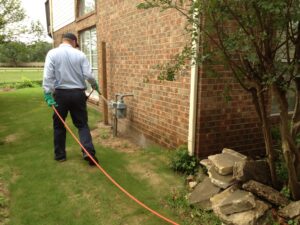
Professional spider control combines targeted, long-lasting residual barrier applications with ongoing pest inspections to completely eliminate the underlying insect infestations that feed the invading spiders.
You should schedule a professional treatment if you experience any of the following:
- Confirmed Black Widows: Spotting black widows near entry points, in your garage, or around children’s play areas requires immediate, professional eradication to ensure high-risk spaces, such as window wells, are safely treated.
- Repeated Indoor Hobo Spiders: Finding hobo spiders wandering through your main living areas means an active breeding colony is nesting undiscovered near your foundation.
- Yellow Sac Spiders in Living Areas: Finding multiple yellow sac spiders in bedrooms or family rooms points to an indoor infestation that requires wall-void treatments.
- Rapid Reinfestations: If spiders and fresh webs reappear within just a few weeks of using consumer-grade sprays, you are likely dealing with a deep-seated harbor site or a hidden insect problem that requires commercial-grade detection.
Achieving a spider-free Utah home relies on a proactive combination of structural exclusion, regular property maintenance, and eliminating the insect food sources that draw them inside.
FAQs
What is the most dangerous spider in Utah?
The western black widow is the most dangerous and venomous spider in Utah. While hobo spiders and yellow sac spiders can bite, only the female black widow poses a significant medical threat.
Her neurotoxic venom causes severe muscle cramps, abdominal pain, and systemic symptoms that require immediate medical attention.
Are brown recluse spiders in Utah?
No, brown recluse spiders are not established in Utah. Their natural habitat is limited to the central and southeastern United States.
Most local reports of “necrotic” brown recluse bites are actually caused by yellow sac spiders, while physical lookalikes in northern Utah are typically harmless hobo or common house spiders.
Why do I suddenly have so many spiders in the fall?
You see more spiders in the fall because dropping outdoor temperatures force pests indoors for warmth, coinciding with the peak late-summer mating season.
During this time, male hobo spiders and yellow sac spiders actively leave their webs to search for mates, dramatically increasing human encounters in homes.
What is the most common spider found in Utah homes?
The American house spider is the most common web-building spider found inside Utah homes, while wolf spiders are the most common ground-dwelling species encountered. Both are harmless.
The highly prevalent cellar spider is also common and acts as a beneficial predator against other nuisance insects.
Does killing spiders attract more spiders?
No, killing a spider does not attract more spiders. Spider populations are strictly driven by the availability of insect prey, dark harborage spaces, and easy entry access points.
The idea that a dead spider releases a signal to draw in others is a complete myth.
Do peppermint oil and essential oil sprays work against spiders?
No, essential oils do not provide long-term protection against spiders. Any mild repellent effect disappears completely as soon as the oil evaporates.
Essential oil sprays fail to reach deep interior harborages and do not address the pest infestations or foundational cracks driving the problem.