
Roaches are in your Dacula home because it offers the three things they need: moisture, food, and a way in. Georgia’s humidity does the rest, keeping populations active nearly year-round rather than dying back each winter.
Finding one is rarely a fluke. Roaches are nocturnal and hide well, so a daytime sighting usually means a population is already established somewhere nearby.
This guide explains why roaches get into homes in the Dacula area, how to tell the common species apart, what the health risks are, and when professional cockroach control makes sense. If you want the treatment comparison instead, our guide on how to get rid of roaches in Georgia covers DIY versus professional options.
Why Roaches Get Into Dacula Homes
Roaches are not drawn to a house because it is dirty. They are drawn to conditions, and the most important one is water.
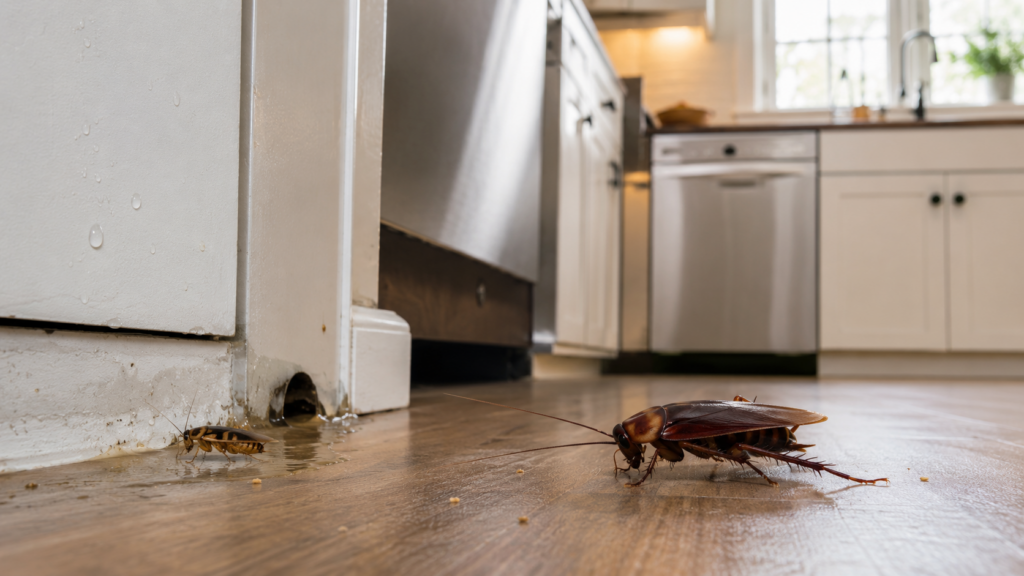
Moisture is the single biggest driver. A slow leak under the sink, condensation behind the dishwasher, a damp crawl space, or a poorly drained foundation all create the humid pockets roaches need. Kitchens and bathrooms concentrate that moisture alongside a food supply, which is why those two rooms produce most of the sightings.
Dacula’s climate compounds the problem. Northeast Georgia summers are hot and humid, and mild winters mean outdoor populations are never fully knocked back. Add the irrigation, mulch beds, and wooded lots common across local subdivisions, and roaches have year-round harborage right against the house.
Food is the second draw, and it takes very little. Crumbs behind the stove, grease film on a cabinet door, an open pet food bag, or an uncovered trash can will sustain a population indefinitely.
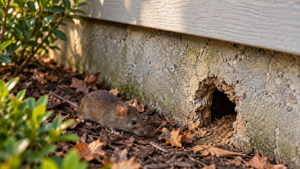
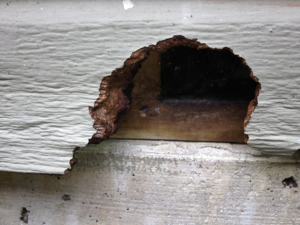
Entry points finish the picture. Roaches slip in through gaps under exterior doors, cracks in the foundation, openings around pipes and utility lines, and floor drains or sewer connections. Heavy summer storms push outdoor species inside in numbers, which is why sightings often spike right after a hard rain.
German, American, and Smokybrown Roaches: Which One Is It?
Three species account for most Dacula calls, and telling them apart matters because each one enters and behaves differently. None of them are native here. The University of Georgia Extension points out that the cockroach pests Georgians encounter were all introduced, with the American cockroach originating in Africa, the smokybrown in Japan, and the German cockroach in Southeast Asia.
| Species | Size | Appearance | Where You Find It |
| German | About 1/2 inch | Tan with two dark stripes | Kitchens, bathrooms, inside appliances |
| American | 1.5 to 2 inches | Large, shiny reddish-brown | Basements, drains, crawl spaces, utility rooms |
| Smokybrown | About 1.25 inches | Uniform dark, glossy brown | Attics, gutters, mulch, around exterior lighting |
The German cockroach is the one that truly infests. It lives indoors for its entire life cycle and reproduces faster than the others, so a small problem becomes a large one quickly.
American and smoky brown roaches are mostly invaders from outside. They breed in drains, mulch, gutters, and crawl spaces, then wander in through gaps and plumbing. Seeing one occasionally usually points to an entry point or a moisture problem rather than an indoor colony.
Signs You Already Have an Infestation
Because roaches feed and move at night, the population is almost always larger than what you see. A few signs give it away before the numbers become obvious.
Droppings are the most reliable clue. German roaches leave specks that look like ground pepper or coffee grounds along cabinet edges, inside drawers, and behind appliances. Larger species leave droppings closer to the size of a grain of rice.
Egg cases are the next tell. These are small brown capsules, often tucked into cracks, cabinet corners, or the seams behind a refrigerator. Finding them means the population is reproducing on site rather than wandering in.
A musty, oily odor that grows stronger over time signals a heavy infestation. So do daytime sightings, which typically mean the hiding spots are overcrowded and roaches are being forced out to forage. Shed skins near warm appliances round out the list.
The Health Risk Roaches Bring Inside
Roaches are more than unpleasant. They travel through drains, garbage, and wall voids, then cross counters and food-prep surfaces, spreading bacteria as they go.
The bigger concern for most families is airborne. The Environmental Protection Agency notes that roach shed skins contain allergens capable of causing asthma, and that roaches and their droppings can trigger asthma attacks. Those allergens build up in dust and circulate through the home.
Children are the most affected. That makes a roach problem worth solving promptly in any household with kids, elderly family members, or anyone managing asthma or allergies.
This health angle is also why waiting rarely helps. German roach populations expand fast. EPA figures show a single female produces four to eight egg capsules in her lifetime, each holding roughly 40 eggs that hatch in about a month.
How to Make Your Home Less Inviting
Prevention comes down to removing water, food, and access. None of it eliminates an established colony on its own, but it makes your home a far harder target and helps treatment hold.
| What to Do | Why It Works |
| Fix leaks and dry damp areas | Removes the water roaches need most |
| Wipe crumbs and grease daily | Cuts off the food supply |
| Store food and pet food sealed | Ends easy overnight feeding |
| Cover trash and empty it often | Removes a major attractant |
| Seal gaps at doors, pipes, foundation | Closes the routes inside |
| Clear mulch and debris from the foundation | Reduces outdoor harborage against the house |
Pay particular attention to crawl spaces and gutters. Standing water and decaying leaf litter give smokybrown and American roaches a place to breed within a few feet of your walls.
When to Call a Professional
A single American roach after a storm is usually an entry-point issue you can address yourself. A pattern is different.
Call a professional when you see roaches during the day, find droppings or egg cases, notice a musty odor, or keep seeing them after cleaning and sealing. Any confirmed German roach activity is worth professional attention early, because that species resists most retail sprays and rebuilds from a hidden nest.
Ants often show up under the same conditions, since both follow moisture and food. Our Dacula ant identification guide covers that side if you are seeing trails as well.
What Roaches Are Really Telling You
Roaches in a Dacula home almost always trace back to moisture, an available food source, and a gap someone has not found yet.
Identifying the species tells you which problem you have. German roaches mean an indoor population that is reproducing. American and smokybrown roaches usually mean an entry point and a damp area outside.
Either way, the fix is the same in principle: dry the space, cut the food, close the gaps, and treat the population at its source. The questions below cover what Dacula homeowners ask most.
FAQs
Why do I suddenly have roaches in my Dacula home?
Usually a change in moisture or access. A new leak, a wet season, a storm that floods drains, or a gap opening up around a pipe can all push roaches inside quickly. Georgia’s humidity keeps outdoor populations high year-round, so pressure on the house is constant.
Does having roaches mean my house is dirty?
No. Roaches respond to moisture, warmth, and access more than to housekeeping. Spotless homes get roaches when there is a hidden leak, a damp crawl space, or an entry point near a drain or foundation crack.
What is the difference between German and American roaches?
German roaches are small, tan with two dark stripes, and live indoors full time in kitchens and bathrooms. American roaches are much larger, shiny reddish-brown, and typically come in from drains, basements, and crawl spaces.
Are roaches dangerous to my family?
They carry bacteria across food surfaces, and their droppings and shed skins release allergens that can trigger asthma attacks. Children are especially affected, so an infestation is worth addressing promptly.
Can I get rid of roaches myself?
You can reduce the conditions that attract them by fixing leaks, sealing gaps, and tightening up food storage. Established German roach populations usually need professional treatment, because retail sprays rarely reach the hidden nest.
How do I know if the problem is serious?
Daytime sightings, droppings, egg cases, and a musty odor all indicate an established population rather than a stray roach. If you see any of these, contact Arete Pest Control for a free inspection.