
Snap traps catch the rodents already inside your home. They do nothing about the ones still coming in, and the gap they are using stays open. That is why DIY rodent control in Dacula so often turns into a months-long routine of emptying traps, and why professional control, built on exclusion first, is what actually ends the problem.
That is the verdict. The rest of this guide explains why it holds, where DIY still has a place, and what the professional version includes.
It compares DIY and professional rodent control for homes in the Dacula area, including what each method does, cost, and the one situation that settles the question on its own. For the methods themselves, our post on what kills rats goes into traps and baits in detail.
Why Snap Traps Alone Rarely End an Infestation
Trapping works. It is part of every professional plan. The problem is what happens when trapping is the whole plan.
Rodents reproduce faster than most homeowners trap. A female mouse can produce a litter every three to four weeks, and roof rats are not far behind. A trap line that catches three mice a week is often running even with the birth rate rather than ahead of it, and the population inside the walls never actually shrinks.
Trap shyness compounds the issue. Rats in particular are cautious of new objects, and the survivors of a trapping campaign learn to avoid the traps that caught their nestmates. The homeowner sees catches drop and assumes the problem is solved. The rats have simply stopped stepping on the traps.
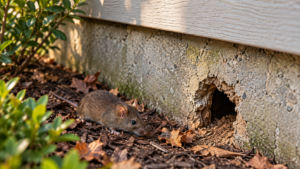
The decisive factor is the entry point. Every rodent you catch came in through a gap somewhere, and the Centers for Disease Control puts sealing those gaps alongside trapping as the core of rodent control. Leave the gap open and the next animal uses it. That is why a kitchen can go quiet for two weeks and then start over.
Traps vs. Bait Stations vs. Exclusion
The three tools in rodent control each do one job, and the order you use them in matters.
| Method | What It Does | Result on Its Own |
| Snap traps | Kills the rodents already inside that step on them | Reduces numbers temporarily; survivors breed and new ones enter |
| Bait stations | Tamper-resistant boxes with rodenticide, mainly exterior | Lowers outdoor population pressure; does not close entry |
| Exclusion | Seals every gap rodents use to enter | Stops new entry; the step that makes trapping finish the job |
Exclusion is the step DIY skips, partly because it is tedious and partly because the entry points are hard to find. Roof rats enter at the roofline through soffit gaps, vent openings, and the spaces where rooflines meet, which a homeowner rarely inspects. Mice use the openings around pipes under sinks, behind appliances, and where utility lines enter the foundation.
Bait stations have their place but need care. They belong in locked, tamper-resistant boxes placed where children and pets cannot reach, and they are mostly an exterior tool for lowering pressure around the foundation. Indoors, baited rodents can die in walls, which creates an odor problem that lasts weeks.
DIY vs. Professional Rodent Control: Cost and Effectiveness
DIY looks inexpensive at the hardware store. Across a fall and winter of traps, bait, and repeated effort, it usually costs more than a plan that solves the problem once.
| Factor | DIY | Professional |
| Upfront cost | $20 to $100 in traps and bait | Usually $250 to $600 for inspection and initial treatment |
| Finds entry points | Guesswork | Full inspection, including roofline and crawl space |
| Seals entry points | Rarely, or ground level only | Exclusion of every gap found |
| Roof rats in attic | Very difficult | Standard work |
| Monitoring | None | Follow-up visits confirm activity has stopped |
| Odor and cleanup | Your problem | Addressed as part of the service |
| Guarantee | None | Satisfaction guarantee and free re-service |
The exclusion row is the one that matters. Everything else in the professional column follows from finding and sealing the entry points, which is the work DIY almost never does.
Where DIY Rodent Control Is Enough
DIY is not always the wrong call, and knowing when it works saves money.
A single mouse in the garage in October, with an obvious gap under the door and no other signs, is a reasonable DIY job. Set two or three snap traps along the wall where you saw it, baited with peanut butter, and fix the door sweep. If the trap catches once and the signs stop, you are done.
Prevention is also squarely in homeowner territory. Store food and pet food in sealed containers, keep trash lidded, trim tree limbs back from the roof, move firewood and stacked items off the foundation, and seal the gaps you can see around pipes and vents. Those habits reduce pressure on the house all year.
If signs continue after two weeks of correct trapping, if the activity is in the attic, or if you find evidence in more than one area, DIY has reached its limit.
What a Professional Rodent Service Includes
Professional rodent control follows a sequence, and exclusion sits near the front of it rather than the end.
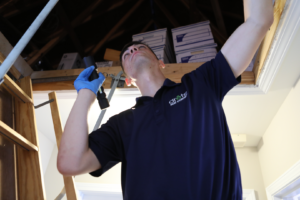
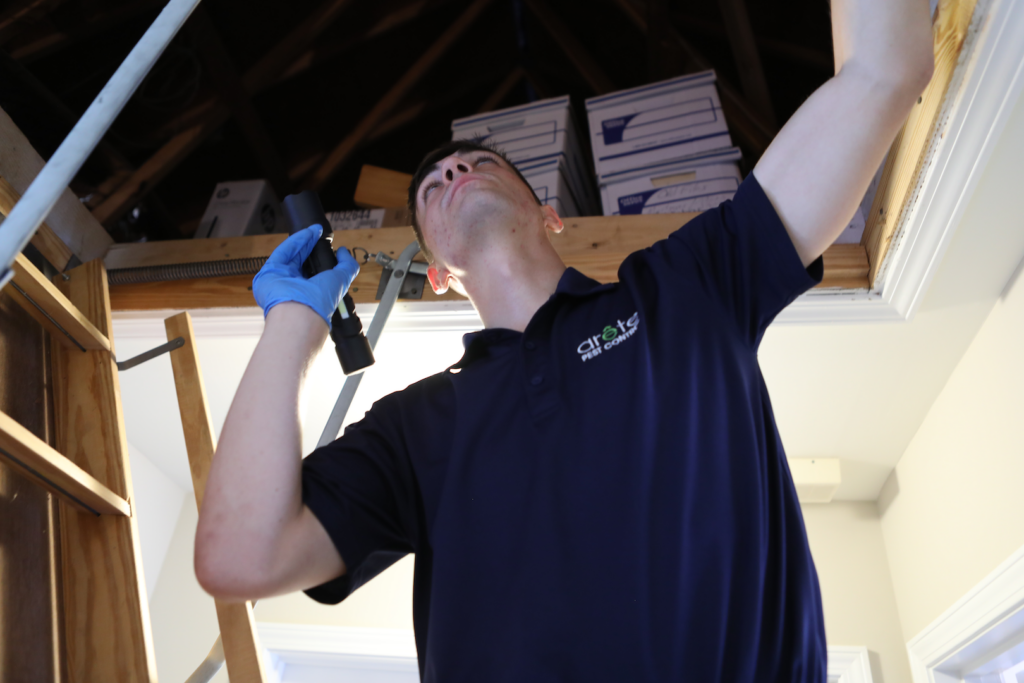
The visit starts with an inspection that identifies the species and maps every entry point, from the roofline and soffits down through the garage, the foundation, and the crawl space. The technician then seals those openings with materials rodents cannot chew through, which is the exclusion step that makes everything after it stick.
Trapping and, where appropriate, exterior bait stations in tamper-resistant boxes reduce the population already inside and the pressure outside. Follow-up visits confirm activity has stopped, remove any carcasses, and address contaminated insulation or nesting material. The work is backed by a satisfaction guarantee with free re-service if rodents return between visits.
For homeowners on a recurring plan, exterior monitoring continues through the year, which catches the next fall’s pressure before anything gets in. The same logic applies to spiders, as our guide to DIY versus professional spider control explains.
Roof Rats in the Attic Mean Call a Pro
One situation takes DIY off the table in Dacula, and it is the most common one.
Roof rats are the species homeowners hear overhead, and they are built for exactly the places a homeowner cannot easily work. They reach the house along tree limbs and utility lines, enter through roofline gaps and soffit vents, and nest in attic insulation. Trapping them means working in a hot, cramped attic, and sealing them out means finding and closing entry points two stories up.
An attic infestation also carries the highest property risk, since chewed wiring and shredded insulation live there, and the highest health risk, since dry droppings in an enclosed space are the classic hantavirus exposure the CDC warns about. That combination is why roof rats in the attic are a professional job from the first night you hear them.
Seal First, Then Trap
Snap traps catch the rodents inside and leave the door open for the rest, which is why DIY so often becomes a routine instead of a solution.
Professional control reverses the order, finding and sealing every entry point first, then trapping down the population and confirming it stays gone. That is the difference between a quiet winter and a trap you empty every week.
A single garage mouse is a DIY job. Anything in the attic, anything that keeps coming back, and anything in more than one room is a job for a pro. The questions below cover what Dacula homeowners ask most.
FAQs
Do snap traps get rid of rodents?
They kill the rodents that step on them, which reduces numbers temporarily. They do not stop new rodents from entering through the same gap, so infestations usually continue until the entry points are sealed.
Why do I keep catching mice?
Because the entry point is still open and the population is breeding faster than you trap. Mice produce a litter every few weeks, so a trap line often keeps pace with births rather than getting ahead of them.
What is rodent exclusion?
Sealing every gap rodents use to get in, from roofline and soffit openings down to pipe penetrations and foundation vents, with materials they cannot chew through. It is the step that makes trapping finish the job.
Is professional rodent control worth the cost?
For anything beyond a single garage mouse, yes. A professional finds and seals the entry points, handles the attic, monitors with follow-up visits, and guarantees the work, which usually costs less over a winter than months of DIY traps.
Can I get rid of roof rats in my attic myself?
It is very difficult. Roof rats enter at the roofline and nest in insulation, so the work involves attic trapping and sealing high entry points. Dry droppings in an enclosed attic also carry disease risk. This is a professional job.
Does Arete guarantee rodent control?
Yes. Rodent service is backed by a satisfaction guarantee with free re-service if rodents return between visits. Contact Arete Pest Control for a free inspection.