
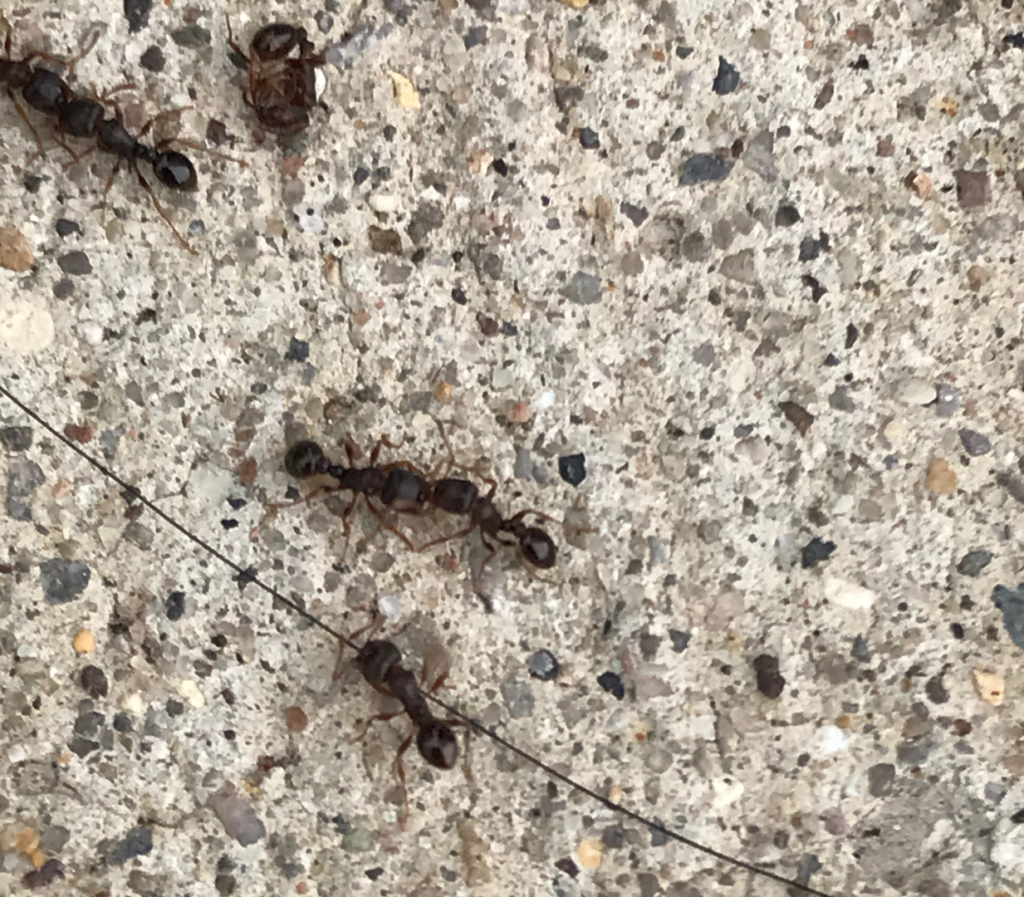
The ants you are most likely to see in a Dacula home are Argentine ants, fire ants, odorous house ants, carpenter ants, and pavement ants. Most are harmless nuisances, but two stand out: carpenter ants can damage wood, and fire ants can deliver painful stings.
Knowing which ant you have matters because the right response is different for each one.
This guide identifies the five most common ants in the Dacula area, explains which ones bite or damage your home, and shows when professional ant control is worth it.
The 5 Ants Dacula Homeowners See Most
Dacula’s humidity, wooded lots, and landscaped subdivisions give ants plenty of food, moisture, and nesting sites. Here are the five you are most likely to encounter.
| Ant | Size | Color | Where It Nests |
| Argentine | About 1/8 inch | Light brown | Soil, mulch, near moisture; huge colonies |
| Fire | 1/8 to 1/4 inch | Reddish-brown | Dome mounds in sunny, open yards |
| Odorous house | About 1/8 inch | Dark brown to black | Near sweets, moisture, wall voids |
| Carpenter | 3/8 to 5/8 inch | Dull black | Moist or damaged wood |
| Pavement | About 1/8 inch | Dark brown to black | Under driveways, sidewalks, slabs |
Argentine Ants
Argentine ants are small, light brown, and show up in long trails, often in kitchens and bathrooms. They are a nuisance, not a stinging or wood-damaging pest.
What makes them hard to control is their sheer numbers. The University of Georgia Extension reports that a mature Argentine ant colony can hold a million or more workers and hundreds of queens, with foraging trails measured at over 350 feet in Georgia.
Fire Ants
Fire ants are reddish-brown and build the dome-shaped mounds you see in sunny lawns. Disturb a mound and they swarm out and sting.
Their sting is painful and can cause allergic reactions. UGA Extension notes fire ant mounds are found in almost every county in Georgia, so Dacula yards are prime territory.
Odorous House Ants
These tiny dark ants are drawn to sweets and moisture, often trailing across counters. Crush one and it gives off a smell like rotten coconut, which is the easiest way to identify them.
They do not sting or damage wood, but they are persistent and can nest inside wall voids near warmth and water.
Carpenter Ants
Carpenter ants are the largest ants you will see indoors, dull black and up to about half an inch long. They forage mostly at night.
Unlike the others, carpenter ants tunnel into wood to build their nests. They are the one species on this list that can damage your home, which is covered in the next section.
Pavement Ants
Pavement ants are small, dark, and nest under driveways, sidewalks, and slabs, pushing up little piles of soil between cracks.
They forage indoors for food but are mainly a nuisance. They do not damage wood and rarely bite, though they can be persistent once they find a reliable food source.
Why Ants Get Into Dacula Homes
Ants come inside for the same three things every pest wants: food, water, and shelter. Dacula’s climate and landscaping supply all three.
- Humidity and moisture. Georgia’s humidity, irrigation, and mulch beds keep the soil damp, which ants and their colonies depend on.
- Easy food. Crumbs, spills, pet food, and sugary residue draw foraging trails straight into kitchens.
- Wooded, landscaped lots. Many Dacula subdivisions sit near trees and undeveloped land, giving ants outdoor nest sites close to the house.
- Small entry points. Gaps around doors, windows, pipes, and the foundation give ants an easy way in.
Reducing those attractants helps, but an established colony usually keeps sending workers inside until the nest itself is treated.
Which Ants Damage the Home?
Of the five, only carpenter ants threaten your home’s structure.
Carpenter ants do not eat wood the way termites do. The University of Georgia Extension explains that they excavate galleries in wood to nest, which over time can weaken structural timbers, especially where wood is already moist or decaying.
A telltale sign is frass, a sawdust-like debris mixed with insect parts that they push out of their tunnels. Small piles under windowsills or baseboards are worth a closer look.
Because carpenter ant damage can be mistaken for termite damage, it helps to tell them apart. If you are unsure, a termite and wood-pest inspection can confirm which pest you have.
Which Ants Sting or Bite?
Fire ants are the stinging ant to watch for in Dacula.
When their mound is disturbed, fire ants swarm and sting repeatedly, leaving itchy white pustules. The University of Georgia Extension notes that fire ant stings can cause serious medical problems, including allergic reactions in sensitive people and pets.
Keep children and pets away from mounds, and never stand on one. The other four ants on this list do not sting, though a few can deliver a harmless nip if handled.
Nuisance vs. Structural Ants
Sorting the five into groups makes it easier to know how worried to be.
| Ant | Category | Main Concern |
| Argentine | Nuisance | Invades in huge numbers |
| Odorous house | Nuisance | Trails to sweets; odor when crushed |
| Pavement | Nuisance | Soil piles; forages indoors |
| Fire | Stinging | Painful, sometimes dangerous stings |
| Carpenter | Structural | Tunnels into wood to nest |
Most ant problems in Dacula are nuisance issues, where ants contaminate food and trail through the kitchen. Only carpenter ants pose a structural risk, and only fire ants pose a sting risk. Even so, a large nuisance colony can be surprisingly hard to clear.
When to Call a Pro
Some ant sightings are minor. Others are a sign the colony is large or established. Call a professional when you notice any of these.
- Trails keep returning after you clean and remove food, which usually means the nest is nearby or indoors.
- You see large numbers of ants, a hallmark of Argentine supercolonies with many nest sites.
- You find frass or hollow-sounding wood, which points to carpenter ants and possible damage.
- Fire ant mounds appear near walkways, play areas, or the foundation.
- You cannot identify the ant, since the right treatment depends on the species.
DIY sprays often make ant problems worse. Killing the workers you see can scatter a colony into multiple nests, so a professional locates and treats the colony at its source instead.
Knowing Your Ants Is the First Step
Most ants in Dacula homes are nuisances, but the stakes rise with carpenter ants, which damage wood, and fire ants, which sting.
Identifying the species tells you how urgent the problem is and what kind of treatment it needs. Trails to sweets are very different from sawdust under a windowsill or a mound in the yard.
Once you know what you are dealing with, you can decide whether to manage it yourself or bring in a professional. The questions below cover the topics Dacula homeowners ask about most.
FAQs
What ants are most common in Dacula, GA?
The five most common are Argentine ants, fire ants, odorous house ants, carpenter ants, and pavement ants. Most are nuisances, but carpenter ants damage wood and fire ants sting.
Which ants in Georgia damage wood?
Carpenter ants. They tunnel into wood to build nests, which can weaken structural timbers over time. They do not eat wood the way termites do, but the damage can look similar.
Which ants sting?
Fire ants. Their stings are painful and can cause allergic reactions in people and pets. The other common Dacula ants do not sting.
Do odorous house ants bite?
No. Odorous house ants do not sting or bite, and they do not damage wood. They are a persistent nuisance drawn to sweets, and they smell like rotten coconut when crushed.
Why do ants keep coming back after I spray?
Sprays kill the ants you see but rarely reach the nest, and they can scatter a colony into multiple nests. Lasting control means treating the colony at its source.
When should I call a professional for ants?
Call when trails keep returning, numbers are large, you find carpenter ant frass, fire ant mounds appear near the home, or you cannot identify the ant. To get started, contact Arete Pest Control for a free inspection.