
To keep stink bugs out of a Georgia home, seal the exterior and apply a perimeter barrier treatment in September, before brown marmorated stink bugs begin searching for a place to overwinter. Once they are inside the walls, there is very little any product can do, so the work has to happen on the outside, and it has to happen early.
That timing is not a guess. It follows the insect’s own calendar.
This guide explains why stink bugs swarm homes in fall, the sealing steps that actually make a difference, how DIY compares to a professional exterior treatment, and when to book. Homeowners across Gwinnett County can pair this with a broader fall pest treatment, since the same barrier stops rodents and spiders.
Why Stink Bugs Swarm Georgia Homes in Fall
The stink bug that invades homes is the brown marmorated stink bug, an invasive species from Asia. The University of Georgia Extension reports it is established across Georgia’s Piedmont, which includes the entire metro Atlanta area, and that it produces two generations a year here.
The second generation matters most for your house. According to UGA, the nymphs from the summer adults mature into overwintering adults in September or October, and those adults immediately begin seeking dark, dry, sheltered sites. Barns, vehicles, and homes all qualify.
UGA’s Integrated Pest Management program adds that day length triggers this. As days shorten in fall, adults enter a dormant state and stop reproducing, which is why they aren’t breeding in your attic. They are simply parked there until spring.
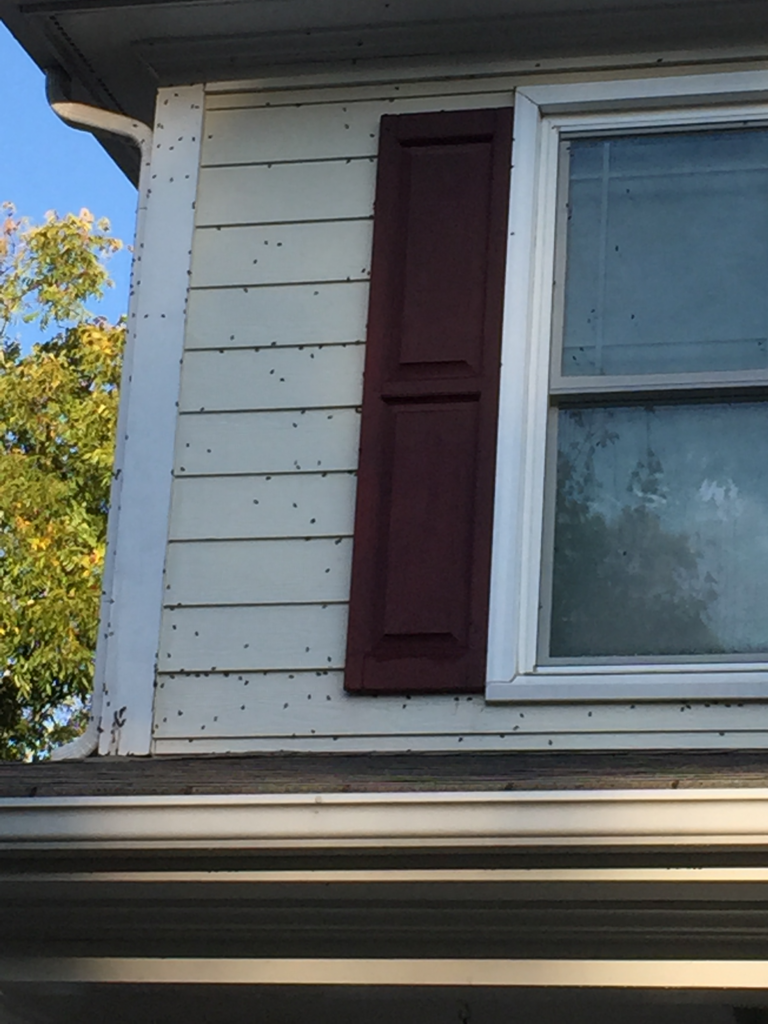
The bugs gather first on the warmest, brightest walls, typically the south and west sides of the house, then probe for gaps. They are strong fliers, and UGA notes they can cover several miles in a month, so a home with no stink bugs in August can host hundreds by mid-October.
The Stink Bug Timing Window
Because the invasion follows the life cycle, the calendar is predictable and the prevention window is narrow.
| When | What Is Happening |
| Late August to early September | Second-generation nymphs finishing development on trees and ornamentals |
| Mid to late September | Adults mature and begin congregating on sunny exterior walls |
| Late September through October | Peak entry through gaps around windows, siding, soffits, and vents |
| November onward | Bugs dormant inside walls and attics until spring warmth |
Sealing and barrier treatment belong in the first two rows of that table. By the third, the bugs are already finding their way in, and by the fourth, the opportunity is gone until next year.
A Sealing Checklist That Actually Works
Sealing is the single most effective thing a homeowner can do, but only if it targets the openings stink bugs actually use. The list is shorter than most people expect.
Start with the sunny walls, since that is where the bugs gather. Caulk gaps around window and door frames, check that screens are intact and fit tightly, and add door sweeps where daylight shows under an exterior door. Then move to the places most people forget, which are the openings around utility lines, dryer and bathroom vents, chimney flashing, and the gaps behind siding trim and under the fascia.
Attic and crawl space vents deserve screening, because stink bugs that get into those spaces will find their way into living areas as the house heats. Finally, replace worn weatherstripping and check that any window air conditioners are removed or sealed before the congregation starts.
Lighting helps too. Stink bugs are drawn to light, so switching porch fixtures to yellow bulbs and keeping them off when not needed reduces the number that land on the house in the first place.
DIY vs. Professional Exterior Treatment
Sealing alone reduces entry but rarely eliminates it, because no house is airtight and stink bugs need very little space. The barrier treatment is what closes the remaining gap, and here DIY and professional work part ways.
| Factor | DIY Approach | Professional Barrier |
| Where it is applied | Wherever you can reach | Full perimeter, eaves, soffits, upper walls |
| Timing | When you get to it | Scheduled to the September window |
| Products | Retail sprays with short residual | Longer-residual exterior products |
| Coverage of entry points | Partial | Systematic, based on inspection |
| Indoor odor risk | High if bugs are crushed or sprayed inside | Exterior focus avoids it |
| Guarantee | None | Free re-service if pests return |
The practical difference is reach and timing. Most stink bug entry happens at the roofline and upper walls that a homeowner cannot treat well from the ground, and the effective window is only a few weeks long.
What a Professional Fall Barrier Treatment Includes
A fall barrier visit focuses on the exterior, where stink bug control succeeds or fails.
It begins with an inspection of the sunny walls, roofline, soffits, vents, and utility penetrations to map where bugs are gathering and where they can get in. The technician then applies a longer-residual exterior treatment around the full perimeter, with extra attention to the south and west walls and the upper areas that DIY cannot reach.
Entry points found during the inspection are sealed or flagged for sealing, and the visit also doubles as a fall barrier against rodents and spiders moving indoors. Follow-up confirms the barrier is holding, and re-service is free if pests get through.
Products are family- and pet-conscious and applied to the exterior, which also avoids the classic stink bug mistake of spraying or crushing them indoors and living with the odor.
What to Do If They Are Already Inside
If stink bugs beat you to it, the goal shifts to removing them without triggering the smell.
Vacuum them with a shop vac or a vacuum with a disposable bag, then empty it outside immediately. Don’t crush them or spray them indoors, since both release odor and indoor sprays do nothing for bugs still hidden in the walls. A bowl of soapy water under a lamp in a dark room will catch a surprising number overnight.
Then seal and treat the exterior anyway. The bugs inside are the ones that made it, and the ones on the wall are still trying. Handling the exterior in October still cuts the total that get in, even if the ideal window has passed.
Seal Early and Treat the Outside
Stink bugs swarm Georgia homes in late September and October because that is when the year’s second generation matures and goes looking for winter shelter.
Sealing the sunny walls, vents, and roofline openings does most of the work, and a professional perimeter treatment timed to that window closes the rest. Neither helps much once the bugs are in the walls.
Book before the congregation starts and the fall barrier keeps stink bugs, rodents, and spiders out together. The questions below cover what Georgia homeowners ask most.
FAQs
When do stink bugs come inside in Georgia?
Late September through October. The second generation matures in September or October, then seeks dark, dry shelter, gathering on sunny walls before squeezing inside.
Do stink bugs breed inside my house?
No. They enter a dormant state as days shorten and stop reproducing. The bugs you see indoors are the ones that got in, not a growing colony.
What is the best way to keep stink bugs out?
Seal gaps around windows, doors, vents, siding, and the roofline in early September, and pair that with an exterior perimeter treatment before the bugs begin congregating.
Do indoor sprays work on stink bugs?
Not well. Indoor sprays do not reach the bugs hidden in walls and can release the odor. Control belongs on the exterior, before entry.
Should I crush stink bugs?
No. Crushing releases the smell. Vacuum them and empty the bag outside, or use a soapy water trap under a light.
Is professional stink bug treatment worth it?
For homes that get invaded every fall, yes. A pro reaches the roofline and upper walls, times the treatment to the window, and guarantees the work.