

Eliminating carpenter beetles takes two things in Northern Georgia—professional treatment that reaches the larvae inside the wood, and repair or replacement of the infested timber. Surface sprays alone fail, because the damage is done by larvae tunneling deep below the surface where nothing you spray can reach.
Carpenter beetle is the common name North Georgia homeowners use for the wood-boring beetles, including the powderpost group, that attack decks, porches, eaves, and framing. The University of Kentucky Department of Entomology ranks powderpost beetles second only to termites in their ability to damage dry, seasoned wood.
This guide covers how to identify them, how they differ from termites and carpenter ants, why DIY rarely finishes the job, and what professional treatment involves. If wood damage is the concern, a termite and wood-pest inspection confirms exactly which pest you have.
Quick ID: Round Holes and Fine Frass
Carpenter beetles announce themselves with two signs, and you will usually see the evidence before you ever see a beetle.
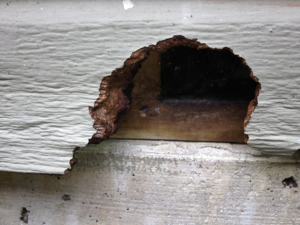
The first is exit holes, which are small, perfectly round openings in the wood surface, often described as shot holes. These are where adult beetles chewed their way out after developing inside. The second is frass, a fine, sawdust-like powder that sifts from the holes and collects beneath them.
Timing helps confirm what you are seeing. UK Entomology notes the full life cycle runs one to five years, with larvae tunneling unseen below the surface the entire time, so holes can appear in wood that looked fine for years.
Freshness is the test that matters. The University of Maryland Extension advises that fresh-looking, fine frass near the holes signals a live infestation, and that if you clean the powder away and it reappears within a few weeks, the infestation is active. Old holes with no new powder are often historical damage.
Beetles vs. Termites vs. Carpenter Ants
Three wood pests damage North Georgia homes, and they are treated completely differently, so the identification has to come first.
| Sign | Carpenter Beetles | Termites | Carpenter Ants |
| The insect | Small beetles, rarely seen | Pale, hidden in wood and tubes | Large black ants, forage at night |
| Eats wood? | Larvae feed on it inside | Yes, as food | No, tunnels only to nest |
| Debris | Fine powder from round holes | Mud tubes, no sawdust | Coarse frass with insect parts |
| Holes and galleries | Small round exit holes | Mud-packed tunnels | Smooth, clean galleries |
| Typical target | Dry seasoned or damp exterior wood | Structural wood, soil contact | Moist or water-damaged wood |
The debris is the fastest tell. Fine powder under round holes points to beetles, mud means termites, and coarse sawdust mixed with insect parts means carpenter ants. If you are seeing large ants along with the sawdust, our ant identification guide covers how to confirm them.
Getting this wrong is expensive in both directions. Treating beetles with an ant approach does nothing, and dismissing what is actually termite activity gives the costlier pest more time to feed.
Where Carpenter Beetles Strike in North Georgia Homes
Wood-boring beetles follow the wood conditions, and North Georgia’s humid climate creates plenty of the conditions they like.
Exterior softwood takes the most hits: decks, porch framing, roof eaves, and fence posts, especially where the wood is unfinished or stays damp after rain. Indoors, crawl spaces and basements are the common entry point, since elevated wood moisture there suits developing larvae.
Infestations also arrive ready-made. Beetles frequently come into a home inside firewood, reclaimed lumber, hardwood flooring, or older furniture, then emerge and lay eggs in the structure itself.
Bare, unfinished wood anywhere in the house is the open invitation, because finished and sealed surfaces do not accept eggs.
Why DIY Rarely Fully Eliminates Them
The reason store-bought treatment disappoints comes down to where the beetles actually are.
At any given moment, nearly the whole infestation is larvae tunneling inside the wood, where they may stay for one to five years. A surface spray coats the outside of the timber and never touches them.
The adults you might kill on the surface are the ones that already finished their damage.
Reinfestation compounds the problem. Several beetle species lay their next generation of eggs on or just below the surface of the same bare wood, so the cycle continues inside the timber even after the surface looks treated.
There is also the diagnostic trap. UK Entomology points out that homeowners routinely receive conflicting opinions about whether beetle damage is even active, and treating old, inactive holes wastes money while an active infestation elsewhere goes unnoticed.
Confirming activity first is half the job.
What Professional Treatment Involves
Professional carpenter beetle work follows a sequence, because no single product handles every stage of the problem.
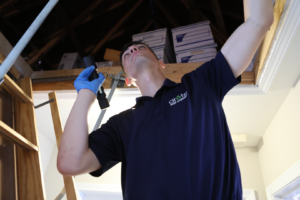
It begins with an inspection that confirms the pest, maps the extent of the damage, and determines whether the infestation is active, using the fresh-frass evidence rather than guesswork. The technician also identifies the moisture conditions, such as damp crawl spaces or unsealed exterior wood, that invited the beetles in.
Treatment then targets the wood itself. Residual products and borate-based treatments penetrate into the timber to reach larvae and protect against the next generation, and targeted applications treat active galleries directly.
Severely infested or structurally weakened wood is repaired or replaced, and bare replacement wood is sealed or finished so it no longer accepts eggs.
Follow-up confirms the infestation is finished. Because the life cycle is long, monitoring for fresh frass over the following seasons is what separates elimination from a pause.
When to Call a Pro
Some situations settle the DIY question immediately. New round holes with fresh powder mean an active infestation that surface products cannot reach. Powder that returns after you clean it away means the larvae are still working.
Damage in structural wood, including framing, joists, decks, and porch supports, raises the stakes beyond what any spray addresses, and widespread holes across multiple boards suggest the infestation has been cycling for years.
Uncertainty is also a good reason. Distinguishing active beetle damage from old holes, or beetle work from early termite activity, is exactly what a professional inspection resolves, and it is free.
Ending the Infestation for Good
Carpenter beetles are a slow-motion pest: larvae tunneling quietly inside North Georgia wood for years, announced only by round holes and fine powder.
Elimination means reaching them inside the timber with penetrating treatment, repairing what they weakened, and sealing the wood against the next generation, which is work surface sprays cannot do.
Confirm the pest, confirm the activity, and treat the wood rather than the surface. That is the difference between eliminating them for good and watching new powder appear next spring. The questions below cover what North Georgia homeowners ask most.
FAQs
What do carpenter beetle holes look like?
Small, perfectly round exit holes in the wood surface, often called shot holes, with fine, sawdust-like powder sifting from them or collecting below. The holes are where adult beetles chewed out after developing inside.
How do I know if the infestation is active?
Fresh-looking powder near the holes is the key sign. Clean it away, and if it reappears within a few weeks, larvae are still working inside the wood. Old holes with no new powder are usually historical damage.
Are carpenter beetles as bad as termites?
They are ranked second only to termites in their ability to damage dry, seasoned wood. Termites typically cause faster structural damage, but a long-running beetle infestation can seriously weaken timber.
Can I get rid of carpenter beetles with spray?
Surface sprays rarely work, because the larvae doing the damage live deep inside the wood for one to five years. Effective treatment penetrates the timber and is paired with repairing or sealing the infested wood.
What is the difference between carpenter beetles and carpenter ants?
Beetles leave small round holes with fine powder, and you rarely see the insect. Carpenter ants are large black ants that push out coarse sawdust mixed with insect parts and forage in the open at night.
Who should I call about wood damage in North Georgia?
Start with a professional wood-pest inspection, which identifies whether you have beetles, termites, or carpenter ants and whether the damage is active. Contact Arete Pest Control to schedule a free inspection.