
While yellow sac spiders are very common in Utah homes, they are generally not considered dangerous to humans in a life-threatening sense.
Their venom is potent enough to cause painful, itchy welts and, in rare cases, mild localized necrosis. However, they lack the severe toxicity considered medically significant, as in the black widow.
These arachnids are a persistent threat to homeowners because they are active nocturnal hunters that frequently seek shelter indoors during seasonal transitions, often hiding in ceiling corners or behind furniture.
Because they are prolific breeders and expert hiders, DIY methods often fail to reach the source of an infestation, making professional pest control necessary to ensure long-term protection.
By understanding their behavior and implementing strategic exclusion, you can effectively reclaim your home from these unwanted intruders.
What Are Yellow Sac Spiders?
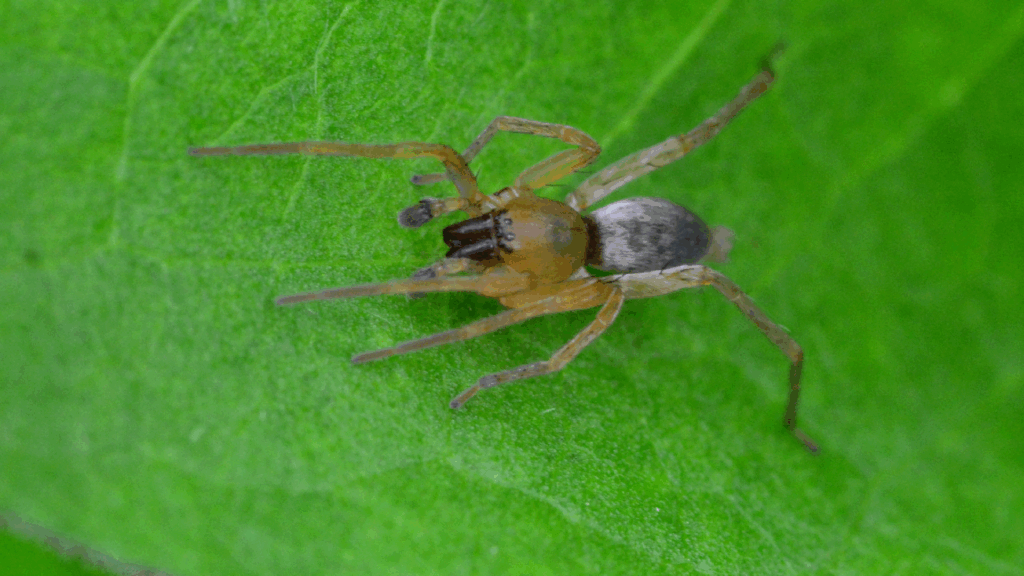
Yellow sac spiders, or Cheiracanthium inclusum, are pale yellow to light green arachnids with slender bodies typically measuring between 1/4 and 1/2 inch in length.
Known for their incredible speed, these spiders are unique because they do not spin traditional geometric webs to capture prey. Instead, they are nocturnal active hunters that spend their nights prowling walls and ceilings for insects.
During the day, they retreat into distinctive, silken tube-like sacs typically tucked away in high corners, wall-ceiling junctions, or behind household decor.
Are Yellow Sac Spiders in Utah Dangerous?
A yellow sac spider bite produces immediate, sharp pain at the bite site, followed by redness and localized swelling. In some cases, a small blister or papule develops over 12 to 24 hours.
The Utah Poison Control Center confirms that yellow sac spider bites are the most commonly reported arachnid bite incidents in the state. Most resolve within one to two weeks with basic wound care.
Mild necrosis, meaning a shallow tissue reaction with slow healing, occurs in a small percentage of bites but is far less severe than brown recluse venom. In even rarer cases, Dermonecrotic Arachnidism may result from a bite by a yellow sac.
People with compromised immune systems, the elderly, and young children may heal more slowly and should consult a physician if symptoms worsen beyond the first 48 hours.
Bites almost always occur by accident. Yellow sac spiders do not pursue humans. The typical scenario is a spider that has dropped into bedding or clothing and is pinched against skin when the fabric is handled or worn. How to Identify a Yellow Sac Spider
How to Identify a Yellow Sac Spider
Despite their name, identifying a yellow sac spider requires looking for specific physical traits beyond color alone. These spiders often have a translucent appearance, sometimes taking on a slight greenish tint depending on their recent diet.
A key identifying feature is their darker feet (tarsi) and a faint longitudinal stripe running down the center of their abdomen.
Unlike the common house spider, yellow sac spiders have two rows of eight small, similarly sized eyes and notably long front legs that they use to feel their environment while hunting.
If you spot a small, white silk pouch in the upper corner of a room, there is a high probability that a yellow sac spider is resting inside.
Why Utah’s Climate Creates Ideal Yellow Sac Spider Conditions
Yellow sac spiders are naturally adapted to arid and semi-arid environments. Utah’s combination of low annual rainfall, low relative humidity, and high solar radiation across the Wasatch Front and Salt Lake Valley creates ideal conditions for yellow sac spiders to thrive.
- Low humidity: Yellow sac spiders desiccate at humidity levels preferred by many other spider species. Utah’s interior humidity, particularly in heated homes during winter, is comfortable for yellow sac spiders but discourages competitors.
- Seasonal temperature drop: As temperatures fall across the Wasatch Front in September and October, yellow sac spider populations that spent the summer hunting in gardens, landscaping, and exterior siding migrate inward. This accounts for the spike in indoor sightings in fall that Utah homeowners consistently report.
- Year-round indoor prey: Yellow sac spiders follow food. Homes with existing populations of fruit flies, gnats, small moths, or other tiny flying insects provide the prey base that sustains indoor yellow sac spider populations through winter. Controlling insect populations inside the home reduces the food resource that makes it worthwhile for them to stay.
Where Yellow Sac Spiders Live Inside Utah Homes
Yellow sac spiders are primarily found in the elevated levels of the home that provide easy shelter.
- Ceiling corners and crown molding: The junction between wall and ceiling is the most common indoor sac location, especially in rooms with low foot traffic. Sacs are often built fresh each day as the spider moves to a new area.
- Behind picture frames and wall art: The narrow gap between a frame and the wall is a protected, undisturbed resting site that yellow sac spiders repeatedly return to.
- Window and door frames: Frames with small gaps at their edges provide access points from the exterior and ready-made shelter. This is also where entry during fall migration most commonly occurs.
- Closets and folded clothing: Yellow sac spiders that have dropped from higher locations often end up in undisturbed fabric. This is the primary scenario for bites, which occur when a spider is accidentally pressed against skin.
- Attic spaces and wall voids: Utah homes with inadequate attic sealing provide warm, insect-populated voids where yellow sac spiders overwinter and reproduce without ever entering occupied living areas.
How to Get Rid of Yellow Sac Spiders in Utah Homes
Eradicating yellow sac spiders from your Utah residence requires a proactive strategy that goes beyond simply swatting the occasional intruder.
Seal Entry Points Before Fall Migration
The single most impactful yellow sac spider prevention step is sealing the gaps through which they enter in late summer and fall.
Focus on window and door frames where weatherstripping has deteriorated, gaps where utility lines or pipes enter the foundation, and the junction between exterior siding and window trim.
A bead of silicone caulk applied in August stops the fall migration before it begins.
Remove Silk Sacs and Vacuum Regularly
Disrupting sac locations forces yellow sac spiders to spend energy rebuilding rather than reproducing. Vacuuming ceiling corners, behind frames, and along upper wall edges weekly during peak season removes sacs along with any eggs inside them.
The vacuum bag or canister should be emptied outside immediately after to prevent the spider from returning.
Reduce Insect Prey Indoors
Yellow sac spiders that cannot find prey will not establish a long-term indoor population. Reducing the insects they feed on, primarily small flies and gnats, removes the food source that sustains them through winter.
Professional Perimeter Treatment
Residual insecticide applied to the exterior foundation line, window frames, and eave areas in late summer creates a barrier that interrupts fall migration before spiders reach the interior.
Interior crack-and-crevice treatment in high-activity rooms addresses established populations.
Arete Pest Control’s spider treatment programs are timed to Utah’s specific seasonal migration pattern, targeting peak exposure windows rather than reacting after indoor populations are already established.
Frequently Asked Questions
Are yellow sac spiders venomous?
Yes, but their venom is not medically dangerous to healthy adults. Yellow sac spider venom contains cytotoxic compounds that cause localized tissue irritation at the bite site, producing pain, redness, and occasional minor necrosis.
Systemic effects are rare. The Utah Poison Control Center classifies yellow sac spider bites as painful but non-life-threatening in the vast majority of cases.
What time of year are yellow sac spiders worst in Utah?
Two peaks occur. The first is late spring when overwintered adults become active.
The second, and more significant, is late September through November when outdoor populations migrate indoors as temperatures drop. Fall is when most Utah homeowners report their first indoor sightings of the season.
Can I have yellow sac spiders if I keep a clean house?
Yes. Yellow sac spiders enter homes in search of prey and shelter, not because of sanitation conditions.
A clean home with no food debris still attracts them if there is an insect population for them to hunt and exterior gaps for them to enter through. Cleanliness helps, but is not sufficient on its own as a prevention strategy.
How do I tell a yellow sac spider apart from a brown recluse?
Brown recluse spiders are not established in Salt Lake or Utah County. Any pale spider found in a Utah home is far more likely to be a yellow sac spider than a brown recluse.
Yellow sac spiders are uniformly pale yellow with no markings, have eight eyes arranged in two rows, and are fast-moving ceiling hunters. Brown recluses have a distinctive violin-shaped marking on the cephalothorax and six eyes arranged in a semicircle.
If you are uncertain about a spider species, Arete Pest Control can identify it from a photo or live specimen.
How long does it take for a yellow sac spider infestation to resolve?
With professional exterior and interior treatment, most Utah homeowners see a significant reduction in indoor yellow sac spider activity within two to three weeks.
Complete resolution of an established population typically takes one full treatment cycle, with a follow-up visit six to eight weeks later to address any newly hatched individuals from eggs that survived the initial treatment.