
The western black widow is the only spider commonly found in northern Utah homes that is medically dangerous. The other two homeowners worry about most, the yellow sac spider and the hobo spider, can bite but do not cause serious harm. That distinction determines what to do next: a widow in the garage means calling a professional, while a hobo in the window well means vacuuming.
Brown recluse spiders, the species people fear most, do not naturally in Salt Lake or Utah County. Any brown spider in a northern Utah home is something else.
This guide identifies the three spiders that matter, explains why October brings them indoors, covers bite risk and when to seek care, and lays out when professional spider control makes sense for homes in Orem, Draper, and Sandy.
The 3 Spiders That Matter in Utah
Utah is home to more than 600 spider species, and nearly all of them are harmless. Three account for almost every call a Utah homeowner makes.
|
Spider |
Look |
Where It Lives |
Web |
Bite Reality |
|
Western black widow |
Glossy black, red hourglass underneath |
Window wells, garages, woodpiles, meter boxes |
Messy, low cobweb |
Medically dangerous |
|
Yellow sac spider |
Small, pale yellow or cream, about 1/4 inch |
Upper walls and ceilings, inside homes |
Small silk sac in corners |
Painful, not dangerous |
|
Hobo spider |
Medium brown, long plain legs, 1/2 to 5/8 inch |
Window wells, basements, foundation cracks |
Funnel web near ground |
Not medically significant |
Western Black Widow
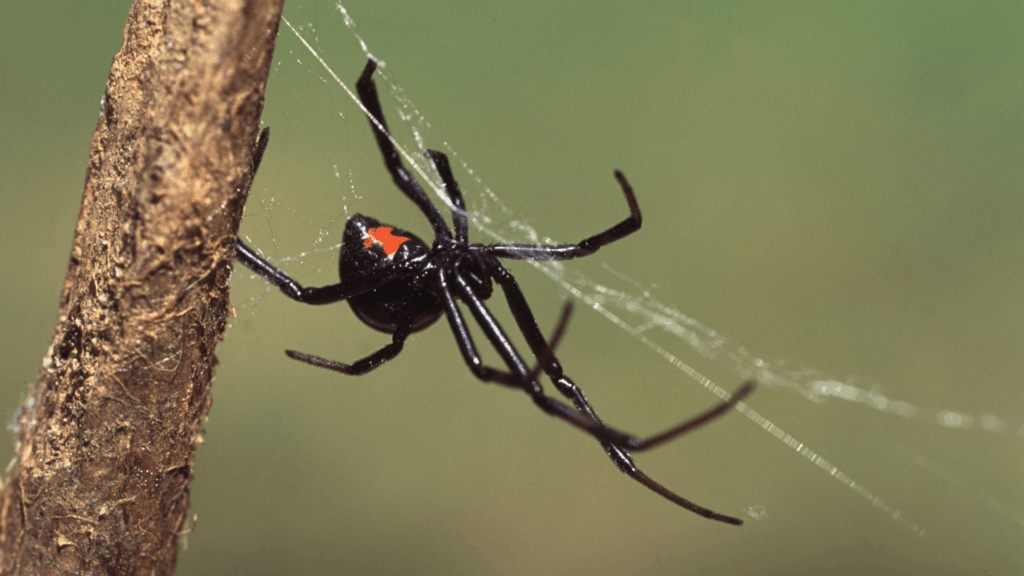
The black widow is the one true medical risk in northern Utah and the spider responsible for most serious bites statewide. Females are glossy jet black with a red or orange hourglass on the underside of the abdomen, and they build irregular, tangled webs low to the ground in dark, undisturbed places. Window wells are the single most common nesting site in Salt Lake and Utah County, followed by garage corners, woodpiles, and the inside of stored items.
Widows are shy and bite only when pressed, usually when someone reaches into a hiding spot. The venom is a neurotoxin, and the bite can progress over hours to severe muscle cramping, abdominal rigidity, nausea, and sweating.
Yellow Sac Spider
Yellow sac spiders are among the most common indoor spiders in Utah. They are small and pale, hunt at night instead of building a catching web, and rest by day in small silk sacs where the wall meets the ceiling. They are more defensive than most house spiders and will bite if trapped in clothing or bedding.
The bite hurts, often causing redness, swelling, and a burning sensation for a few days, but the venom isn’t medically dangerous. It is the spider most likely to actually bite a Utah homeowner and the least likely to cause lasting harm.
Hobo Spider
Hobo spiders are very common in northern Utah and very commonly misunderstood. Earlier reports blamed them for necrotic skin lesions, but the Utah State University Extension notes that modern research has not supported those claims and that hobo spiders are not considered medically significant. They are medium brown with plain legs lacking dark bands, build funnel webs near the ground, and run fast but climb poorly, which is why they turn up at floor level in basements and window wells.
In Salt Lake and Utah County, hobo spiders are the species most often misidentified as brown recluses. True brown recluses do not occur here, so a hobo sighting is a nuisance, not an emergency.
Why Spiders Move Indoors in Fall
Spider sightings climb every fall in Utah, and the USU Extension explains that this is a shift in movement rather than a population spike. The spiders were already around. October is when they come inside.
Three things drive the move. Mature males wander in search of mates, which puts large wolf spiders and hobo spiders on garage floors and basement corners. Temperatures dropping into the forties push spiders toward heated basements and attics. And the insects spiders eat, including ants and boxelder bugs, are moving indoors at the same time, so the spiders follow the food.
Homes against the Wasatch foothills, including much of Draper and Sandy, see more of this traffic because the open land next door holds the summer population. Homes near Utah Valley University and along State Street in Orem see more yellow sac activity from density and lighting.
Bite Risk and When to Seek Care
Most Utah spider bites cause minor, mosquito-like irritation and need nothing more than soap, water, and an ice pack. A few situations call for a doctor.
Seek medical attention for any suspected black widow bite, particularly if muscle cramps, abdominal pain, sweating, nausea, or difficulty breathing develop in the hours afterward. Children, older adults, and anyone with a compromised immune system are at higher risk. Seek care if any bite develops into an expanding sore that won’t heal, regardless of which spider you suspect.
For hobo and yellow sac bites, clean the area, apply ice, and watch it. If you can safely capture the spider, do, since identification settles most of the worry. The Utah spider library has photos for comparison.
DIY vs. Professional Spider Control
Spider control in Utah is mostly about habitat, and homeowners can do a great deal of it. The question is where DIY stops being enough.
|
Factor |
DIY |
Professional |
|
Sealing and exclusion |
Caulk, sweeps, screens, well covers |
Inspection-based sealing of what you missed |
|
Window wells |
Covers, gravel, monthly cleanout |
Treated and inspected, the top widow site |
|
Removing webs and egg sacs |
Reachable corners |
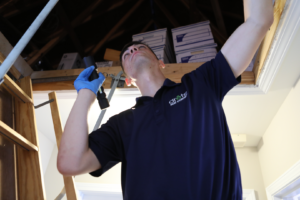
Eaves, soffits, voids, with a de-webber pole |
|
Black widow handling |
Risky, hands go where widows are |
Identified and treated without exposure |
|
Reducing prey insects |
Lighting changes, cleanup |
Treated as part of a pest plan |
|
Guarantee |
None |
Free re-service if spiders return |
For nuisance spiders, DIY habitat work does most of the job. Seal gaps, cover window wells, keep firewood away from the house, trim shrubs off the siding, swap porch lights to yellow bulbs, and vacuum corners before egg sacs hatch. A home that does those things will see far fewer spiders.
Black widows change the equation. Their favorite spots are the ones hands go into, and treating them yourself means reaching in. That is where a professional earns the fee.
When to Call a Pro
Call a professional when you find black widows in window wells, garages, sheds, or crawl spaces, when you find more than one, or when you find them anywhere children or pets play. A single widow is often a sign of several.
Call as well when webs and spiders keep returning after you have sealed and cleaned, since that points to an insect problem feeding them, and when fall sightings in the basement or garage are heavy enough that you have stopped going in without a flashlight. Carpet beetles and other fall closet pests often show up alongside spiders, and our Utah carpet beetle guide covers that side.
A professional visit identifies the species, treats the window wells and harborage where widows nest, de-webs the eaves and soffits, and addresses the prey insects drawing spiders in. Same-day and next-day service is available, and re-service is free if spiders return.
Respect the Widow, Vacuum the Rest
Northern Utah has one dangerous spider, the western black widow. The yellow sac spider bites but does not harm, the hobo spider is not medically significant despite its reputation, and the brown recluse does not live here.
October brings all of them indoors as they seek mates, warmth, and prey, so fall is the season to seal, cover window wells, and clear harborage.
Handle the nuisance spiders yourself and bring in a professional for widows. The questions below cover what Utah homeowners ask most.
FAQs
What is the most dangerous spider in Utah?
The western black widow. It is the only spider commonly found in northern Utah homes whose bite is medically dangerous, and it is responsible for most serious spider bites in the state.
Are hobo spiders dangerous?
No. USU Extension notes that modern research has not supported earlier claims of necrotic bites, and hobo spiders are not considered medically significant. A bite may cause temporary redness or mild swelling.
Are there brown recluse spiders in Salt Lake or Utah County?
No. Brown recluses do not occur naturally in northern Utah. Hobo spiders, wolf spiders, and yellow sac spiders are the brown spiders most often mistaken for them.
Why am I seeing more spiders in October?
Mature males are searching for mates, cooling temperatures push spiders toward heated spaces, and the insects they eat are moving indoors too. USU describes it as a shift in movement rather than a population spike.
What should I do if a spider bites me?
Wash the area, apply ice, and monitor it. Seek medical care for a suspected black widow bite, for muscle cramps, nausea, or sweating after any bite, or for a sore that is not healing. Capture the spider if you safely can.
When should I call a professional for spiders?
When you find black widows, when spiders keep returning after sealing and cleaning, or when fall activity in the garage or basement is heavy. Contact Arete Pest Control for a free inspection.