
Scorpions in Utah are most active on warm nights between May and September, emerging within an hour of sunset once ground temperatures climb into the mid-70s.
Scorpion activity peaks on humid nights following daytime highs above 90 degrees, when evaporative cooling at the surface draws scorpions out to hunt while their burrows are still warm.
The Wasatch Front is home to several species of scorpions, including the Arizona Bark Scorpion, the only spider species in the United States that is considered life-threatening.
Understanding when scorpions are most active in Utah is important for protecting you and your family from potentially dangerous bites and deploying the right preventative measures.
While scorpion activity is usually most concentrated in lower parts of the home, such as the foundation or basement, scorpions can be found anywhere, including your garage, bedroom, or even attic, when you least expect it.
In this guide, you’ll learn when spider activity peaks seasonally and during the day to best plan to avoid and eliminate any scorpions on your property.
What Time of Night Do Scorpions Come Out in Utah?
Scorpions emerge from their shelter shortly after sunset during the first two hours of darkness and then again a few hours just before dawn.
As temperatures drop to their lowest during the middle of the night, scorpions will retreat to their shelter underneath rocks, logs, or other debris.
This pattern tracks ground temperature more closely than clock time. On a night that stays warm well past midnight, scorpions may stay active later.
On cooler summer nights, scorpions may only emerge for an hour after sunset or not at all.
To inspect for suspected scorpion activity, we suggest searching near the foundation of your home or near areas where they may shelter one to two hours after sunset.
What Temperatures Do Scorpions Typically Emerge?
Any temperature between 77 and 90 degrees is considered the sweet spot for scorpion activity.
When temperatures climb above 100 degrees, they will dig holes deep into the earth for shelter and similarly for anything below 68 degrees.
Sudden cold snaps in late May or early September will affect scorpion activity for several days, helping protect homeowners from potential exposure.
For this reason, scorpion activity tends to peak during the hottest six to eight weeks of summer (July-August), when overnight lows in the Salt Lake Valley and Utah Valley commonly stay in the high 60s to mid-70s,
Which Scorpion Species Are Found in Utah?
Utah is home to four scorpion species that vary in size, behavior, and danger level.
Learning how to identify each species is essential for determining their threat level and what actions you should take to remove them from your property.
Northern Scorpion (Paruroctonus boreus)
The northern scorpion is the most common scorpion species in Utah and Salt Lake Counties.
This species is small, typically around 2 inches long, tan with darker striping along the sides, and has disproportionately large, rounded pincers relative to its body size.
Its sting is comparable to that of a wasp or hornet in most healthy adults, with pain typically subsiding within about four hours.
These scorpions are better suited to cooler temperatures, as their range extends from Southern Alberta to Utah’s high-desert climate.
Giant Desert Hairy Scorpion (Hadrurus spadix)
The largest scorpion species in North America, the giant desert hairy scorpion can reach 5 to 7 inches in length and is covered in fine sensory hairs that detect prey and predator vibrations through the ground.
Despite its size, its venom is mild relative to other species, and stings are generally comparable to a bee sting.
This species preys on other scorpions, lizards, and large insects, and its size makes it the easiest to spot, even when encounters are infrequent.
Arizona Bark Scorpion (Centruroides sculpturatus)
The only scorpion species in the United States capable of causing severe or medically significant reactions, the Arizona bark scorpion is found in Utah primarily in Kane County along the Arizona border, but is found in each county throughout the state.
It is a pale tan scorpion, roughly 2.5 to 3 inches long, with a body coating of bio-wax that reduces water loss in extreme desert heat.
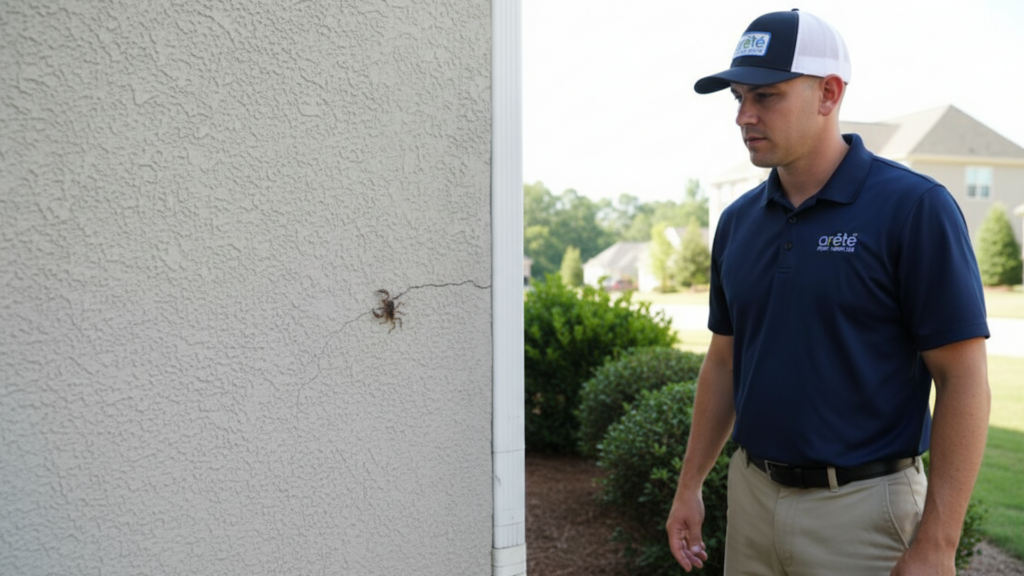
Unlike Utah’s other scorpion species, the bark scorpion does not burrow and instead climbs walls, trees, and stucco surfaces, which is why it ends up inside homes more often than ground-dwelling species.
Black Hairy Scorpion (Hadrurus spp.)
Similar in appearance to the giant desert hairy scorpion but darker in color, the black hairy scorpion is mostly found in the southern desert regions of Utah.
Like its larger relative, its sting is mild, but it is not commonly found throughout the Wasatch Front, though encounters have been documented.
How to Inspect for Scorpion Activity
The best way to detect scorpions in your home is to purchase a special ultraviolet (UV) black light.
Scorpions naturally fluoresce a vibrant, neon blue-green color under ultraviolet light, which is why pest control technicians also use black light to detect live scorpions.
This glow is caused by two specific chemical compounds—beta-carboline and 7-hydroxy-4-methylcoumarin—located in the hyaline layer of their exoskeleton’s outer cuticle. When an exterminator shines a UV flashlight emitting wavelengths between 350 and 400 nanometers, the cuticle absorbs the light and re-emits it as visible light, exposing scorpions instantly in pitch darkness.
This glowing property remains active throughout almost the scorpion’s life cycle and even persists on shed exoskeletons.
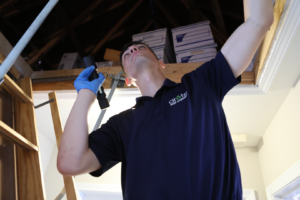
While over-the-counter black lights are popular online for scorpion hunters, it’s best to use a licensed pest control professional who knows where scorpion nests are most common and to avoid painful stings.
How to Reduce Scorpion Activity Around Your Utah Home
By combining structural exclusion with basic yard maintenance, you can significantly lower the chances of an unwanted scorpion encounter in Utah.
Use these proven pest control strategies to protect your home:
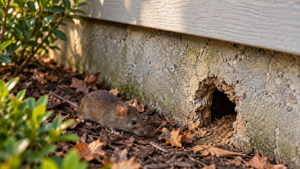
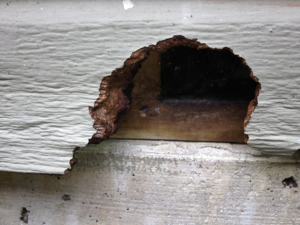
- Seal Foundation Gaps and Entry Points: Scorpions exploit gaps as small as one-sixteenth of an inch around utility penetrations, foundation cracks, window wells, and door thresholds. Sealing these points with an appropriate exterior-grade sealant closes the most common entry points into your structure.
- Eliminate Ground Clutter Near Your Foundation: Woodpiles, stacked stone, and leaf litter stored against exterior walls recreate the exact daytime shelter conditions scorpions seek in the wild. Relocating firewood and yard debris at least 20 feet away from the home removes these ideal hiding spots.
- Reduce Prey Populations: Scorpions hunt spiders, crickets, and other insects, meaning a property with high insect activity will naturally sustain higher scorpion activity. Minimizing exterior lighting that attracts nocturnal insects and addressing existing pest populations indirectly eliminates the primary food source that drives scorpions to your home.
- Inspect Items Before Bringing Them Indoors: Shoes left outside, firewood brought in from an outdoor stack, and storage boxes kept in a garage or shed are common ways scorpions accidentally hitch a ride into living spaces. Giving these items a quick shake-out before bringing them inside during peak active season catches most incidental intruders.
- Address Moisture Sources: While Utah’s native scorpion species are well adapted to arid conditions, broken irrigation lines, leaking spigots, and consistently damp mulch beds against the foundation increase the humidity-stable microhabitats they favor. Fixing these moisture issues keeps both scorpions and their insect prey at bay.
Ultimately, keeping scorpions away from your home relies on consistency, timing, and reducing the environmental factors that draw them in during warm summer nights.
Many local exterminators offer ongoing scorpion control plans that quickly eradicate any scorpions found in your home and provide preventive measures to prevent future infestations.
Frequently Asked Questions
What month are scorpions most active in Utah?
Scorpion activity in Utah peaks in July and August, when overnight lows consistently remain above roughly 77 degrees Fahrenheit. Activity begins increasing in May as nighttime temperatures warm and tapers off through September as overnight lows drop below the activity threshold regularly.
What time of night do scorpions come out?
Scorpions typically emerge within an hour of sunset and are most active during the first two to three hours of darkness, with a second, lighter activity period in the hours before dawn.
Activity tracks ground temperature rather than a fixed clock time, so scorpions remain active later into the night on unusually warm evenings and retreat to shelter earlier when temperatures drop quickly after dark.
Do scorpions come out in the winter?
Utah’s scorpion species do not actively hunt during winter months, when ground temperatures fall well below the activity threshold.
Scorpions remain in shelter through the cold season, and some species can survive brief freezing temperatures and recover once conditions warm, since they do not burrow deep enough to fully escape winter cold the way some other arthropods do.
Are scorpions in Utah dangerous?
The northern scorpion has a sting comparable to a wasp or hornet, with pain typically resolving within about four hours in healthy adults. The Arizona bark scorpion, the only U.S. species capable of causing medically significant reactions, is present in Utah almost exclusively in Kane County in the state’s far south.
Anyone stung by a scorpion who experiences symptoms beyond localized pain, including numbness spreading beyond the sting site, difficulty breathing, or severe muscle contractions, should seek medical attention.
How can I tell if scorpions are active on my property?
A UV flashlight inspection of the yard, foundation perimeter, and exterior walls after dark during the May-through-September season is the most reliable way to detect activity.
Scorpions fluoresce a distinct blue-green color under ultraviolet light due to compounds in their exoskeleton, making them visible at a significant distance even in complete darkness, when they would otherwise go unnoticed.
Why are scorpions getting into my house?
Scorpions enter structures primarily to search for food, shelter, or relief from extreme outdoor temperatures, and they exploit small gaps around foundations, utility lines, and door thresholds to do so.
A property with woodpiles, landscaping debris, or vegetation against the foundation, combined with unsealed entry points, gives scorpions both a staging area immediately outside the home and a direct path inside.