
If you have noticed flying insects near your windows, mud-like material on your foundation, or soft spots in wood around your Dacula home, there is a high likelihood that a subterranean termite is established somewhere near or inside your property.
Since subterranean termites build their colonies underground, the biggest sign of a termite infestation is spotting mud tubes around the foundation of your home.
Additional clues, such as frass, hollowed wood, or even winged insects, could indicate the presence of termites or carpenter ants, both of which can damage wooden structures.
This guide helps you distinguish carpenter ants from termite swarmers using common signs and characteristics, so you can decide on the best treatment plan to protect your home.
Since both carpenter ants and termites can damage wood quickly, but treatments differ widely, it’s essential to get a professional inspection to determine which species you’re dealing with and where they are nesting.
How to Tell Termite Swarmers from Flying Ants in Dacula
To tell the difference between termite swarmers and flying ants in Dacula, look closely at their waist, wings, and antennae. While both appear after spring rains, these three physical traits are the most reliable indicators.
Body Shape
Termite swarmers have a straight, uniform body with no visible waist. Their midsection flows evenly from head to tail. Flying ants have a clearly pinched or “wasp-like” waist where the thorax meets the abdomen. This is the single easiest feature to check.
Wings
Termite swarmers have four wings of equal length. The wings extend well past the body and are translucent. Flying ants also have four wings, but the front pair is noticeably longer than the rear pair. According to NC State University Extension, this wing difference is one of the most reliable ways to confirm whether you are looking at a termite or an ant.
Antennae
Termite antennae are straight and bead-like. They curve gently but do not bend sharply. Ant antennae are “elbowed,” meaning they have a distinct 90-degree bend near the middle.
What About Shed Wings?
After swarming, both termites and ants shed their wings. If you find piles of small, translucent wings on a windowsill, floor, or near a light fixture, check whether the wings are all the same size. If they are, they are likely from termites. If one pair is shorter than the other, they are from ants.
Quick Comparison Table: Termite Swarmers vs. Flying Ants
| Feature | Termite Swarmer | Flying Ant |
| Body shape | Straight, uniform; no waist | Pinched, narrow waist |
| Wings | Four wings, all equal length | Four wings; front pair longer |
| Antennae | Straight, bead-like | Elbowed, sharp bend |
| Body color | Dark brown to black | Black, brown, or reddish |
| Swarm timing (Dacula) | Late Feb through May; daytime | Spring and summer; varies |
| Shed wings | All same length | Two different lengths |
Signs That Suggest an Active Termite Colony
Swarmers are often the first sign that homeowners spot an active infestation, but mud tubes, bubbling paint, and other forms of structural damage can also point to an active termite colony.
Mud Tubes on the Foundation
Mud tubes are narrow tunnels made of soil, moisture, and termite secretions. They typically run vertically along foundation walls, piers, and plumbing pipes.
Termites build these tubes to travel safely between the soil colony and the wood inside the structure.
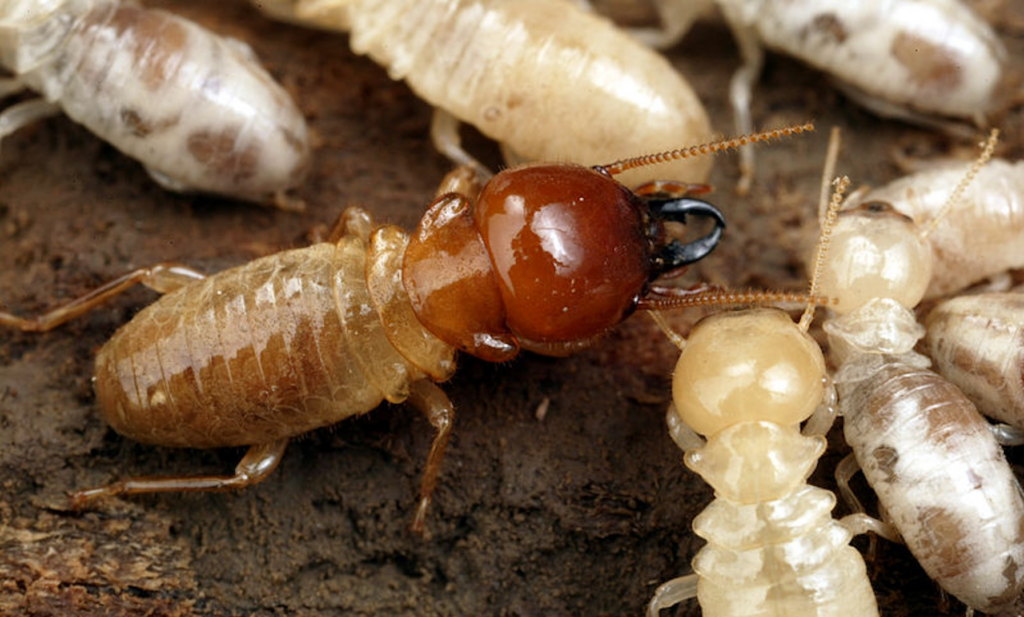
If you find a mud tube, break a small section open and check for live termites. Small, pale, soft-bodied workers confirm the tube is active.
If the tube is empty, it may be old, but it does not mean the infestation is gone. Termites often abandon one tube and build another nearby.
The University of Kentucky Entomology Department notes that vacant tubes should still prompt a professional inspection, because colonies frequently shift their foraging routes within a structure.
Hollow or Damaged Wood
Tap exposed wood in your crawl space, basement, or garage with the screwdriver handle. Solid wood produces a firm sound. Wood that termites have hollowed will sound papery, thin, or hollow.
If you press a screwdriver or similar tool into a suspect area and it passes through easily, examine the damage pattern. Subterranean termite galleries follow the wood grain and contain traces of dried mud or soil. This is different from carpenter ant damage, which produces clean, smooth galleries with no soil and often has visible frass (sawdust-like shavings) pushed out nearby.
Unexplained Paint or Drywall Changes
Bubbling, peeling, or warping paint near the base of interior walls can indicate that termites are feeding beneath the surface. Termite activity creates moisture that affects drywall and paint from the inside.
You may also notice faint, sunken trails or lines beneath paint on drywall. These are surface-level traces of termite galleries running just under the material.
This sign is often mistaken for water damage, but if there is no plumbing leak or moisture source above, termites should be considered.
Small Soil or Mud Deposits in Unexpected Places
Subterranean termites sometimes leave small patches or lines of dried mud on baseboards, window frames, or exposed joists. These are not the same as the large mud tubes on foundations. They are smaller, scattered remnants of tunneling activity that indicate termites are actively working in that area.
4 Signs That You Are Not Dealing with Termites
Not every flying insect or damaged piece of wood means you have a termite problem. Here are a few situations that are commonly mistaken for termite activity.
Carpenter Ant Frass Without Mud
Carpenter ants excavate wood to build nests, but they do not eat it. They push out clean, sawdust-like shavings called frass.
If you find small piles of fine wood shavings near baseboards or windowsills with no soil or mud present, the cause is more likely carpenter ants than termites.
Powderpost Beetle Exit Holes
Tiny round holes in wood surfaces, about the size of a pinhead, are often from powderpost beetles. These beetles bore into hardwoods and leave behind fine, flour-like dust. Subterranean termites do not create round exit holes. Their damage is internal and follows the wood grain.
Moisture Damage Without Insect Evidence
Soft, discolored, or warped wood near plumbing, rooflines, or poorly ventilated crawl spaces can result from water intrusion alone. If there are no mud tubes, no soil-lined galleries, and no insects present, the problem may be moisture-related rather than termite-related. That said, persistent moisture problems attract termites, so both issues can coexist.
Flying Ants Appearing Once and Not Returning
A single swarm of flying ants near an exterior door or window does not necessarily indicate a structural problem. Ant swarms are common in spring and summer across the Dacula area.
If the insects have pinched waists, elbowed antennae, and unequal wings, they are ants. A one-time outdoor ant swarm is usually not a cause for alarm.
What Does a Professional Termite Inspection Include?
If the signs you are seeing point toward possible termite activity, the next step is a professional inspection. Knowing what that inspection should cover helps you evaluate whether the work is thorough.
Full Interior and Exterior Foundation Check
The inspector should examine the entire perimeter of your foundation, both inside and out. This includes behind landscaping, along garage walls, and around all utility penetrations. Mud tubes and entry points are often hidden behind shrubs, stored items, or insulation.
Crawl Space Entry and Examination
A proper termite inspection requires physically entering the crawl space. The inspector should check every accessible joist, sill plate, pier, and the perimeter of the foundation wall for mud tubes, moisture damage, and wood decay. A visual glance from the access door is not sufficient.
Sounding and Probing of Wood
Qualified inspectors tap and probe exposed wood to test for hollow spots or soft areas. Checking for dried mud inside damaged wood galleries is one of the most reliable ways to confirm subterranean termite activity versus other types of wood damage.
Moisture Assessment
Subterranean termites require high moisture levels to survive and thrive. A professional termite inspection focuses on identifying conditions that invite termite colonies.
During the assessment, your inspector will evaluate:
- Crawl Space Humidity: High humidity in enclosed spaces can soften wood, making it easier for termites to infest.
- Foundation Drainage: Improper grading or standing water near the foundation provides the water source that termites need to build mud tubes.
- Gutter & Downspout Performance: Clogged or damaged gutters that dump water directly at the base of your home are a primary cause of termite activity in Dacula.
- Plumbing & HVAC Leaks: Small drips from pipes or AC condensate lines can create localized “hot spots” for termite nesting.
Written Report with Findings
A professional inspection will result in a written report that includes a diagram of the home, the location of any termite activity or damage, conditions that increase risk, and recommendations for treatment or monitoring. If a company offers a verbal summary only, ask for documentation.
Next Steps After Getting Inspection Results
Once you have a professional assessment, you are in a much better position to decide how to treat your pest control problem. Here is what to do next:
If active termites are confirmed, discuss treatment options with the inspector. Ask about liquid barrier treatments, bait systems, or a combination approach. Get a clear explanation of what the warranty covers and for how long.
If no active termites are found but conducive conditions exist, address those conditions first. Fix drainage issues, seal foundation cracks, and maintain your crawl space. These steps reduce risk and may prevent a future infestation.
If you are unsure about the results, get a second opinion. Request inspections from two or three licensed companies before committing to treatment. A reputable company will not pressure you into an immediate decision.
As a general rule, take your time. Subterranean termites cause damage slowly, and a few extra days to compare options will not change your outcome.
If you want help evaluating what you are seeing, contact us to schedule an inspection. We will walk through the findings with you and help you understand what needs attention and what does not.
FAQs
I found wings on my windowsill. Does that mean I have termites?
It depends. If the wings are all the same size and translucent, they are likely termite wings and indicate a colony is active in or very near the structure. If the wings are two different lengths, they are from flying ants, which is a less serious issue.
Can I tell the difference between termite damage and water damage?
Usually, yes. Termite-damaged wood contains soil-lined galleries that follow the grain. Water-damaged wood is soft and discolored but does not have internal mud or soil. If you are unsure, a professional can tell the difference quickly.
Do I need to treat immediately if a swarm appears inside my home?
An indoor swarm means an active colony is present, so treatment is needed. But you do not have to sign a contract that day. Termite damage accumulates slowly. Take time to get multiple quotes and understand your treatment options before committing.
How long does a professional termite inspection take?
A thorough inspection of an average-sized Dacula home typically takes 45 minutes to an hour. Homes with large crawl spaces, complex foundations, or multiple structures may take longer. Be cautious of inspections that take less than 30 minutes.
What if my neighbor has termites? Does that mean I do too?
Not necessarily, but it does confirm that subterranean termite colonies are active in your immediate area. It is a strong reason to schedule an inspection for your own property, especially if you have not had one in the past year.