
The spiders you are most likely to see around a Dacula home are Joro spiders, black widows, brown recluses, wolf spiders, orb weavers, and common house spiders. Four of the six are harmless nuisances. Two, the black widow and the brown recluse, carry venom that matters medically and deserve a careful look.
September is when the question comes up most, because it is peak spider season in Georgia and the Joro spider, the largest of the group, is at full adult size and impossible to miss.
This guide identifies the six spiders Dacula homeowners see, separates the medically significant ones from the rest, explains why fall brings so many, and shows when professional spider control makes sense for homes in the Dacula area.
The 6 Spiders Dacula Homeowners See Most
Dacula’s wooded lots, humid summers, and landscaped subdivisions support a lot of insect life, and where there are insects, there are spiders. These six account for most sightings.
| Spider | Size | Look | Web | Bite Risk |
| Joro | Up to 4 in. legspan | Yellow and black, red on abdomen | Huge golden orb web | Harmless |
| Black widow | About 1.5 in. | Glossy black, red hourglass | Messy, low, in dark corners | Medically significant |
| Brown recluse | About 1 in. | Tan, dark violin on back | Small, irregular, hidden | Medically significant |
| Wolf spider | 1 to 2 in. | Brown, hairy, fast | None, hunts on ground | Harmless |
| Orb weaver | Up to 1 in. | Varied, often patterned | Classic round web | Harmless |
| House spider | Under 1/2 in. | Brownish, mottled | Tangled cobweb | Harmless |
Joro Spiders
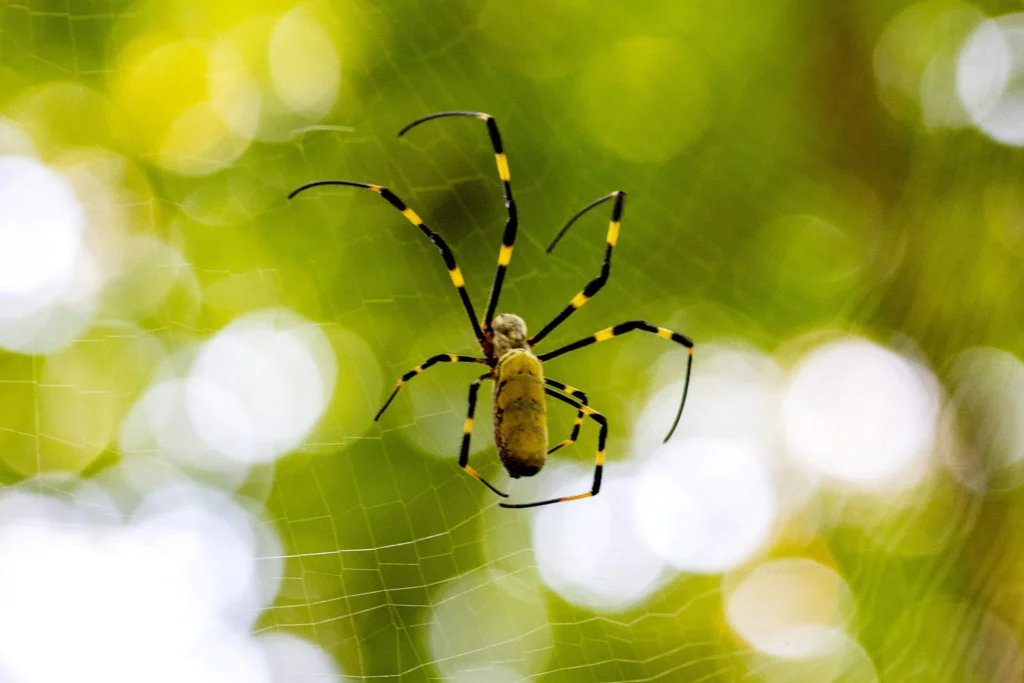
The Joro is the spider everyone in Gwinnett County is asking about. Females reach up to four inches across, wear bright yellow and black with red markings, and spin enormous golden webs across porches, fence lines, and tree gaps. The UGA Extension notes they were first confirmed in Georgia in 2014 and that numbers climb noticeably as fall approaches, which is why September porches are full of them.
Despite the size, they are not a danger. University of Georgia researchers describe them as having little effect on people or local ecosystems, and their bite is compared to a mosquito’s. They are a nuisance, not a threat.
Black Widows
Black widows are the spider to respect in Dacula. Glossy black with a red hourglass on the underside, they build messy, low webs in dark, undisturbed spots such as under deck rails, inside meter boxes, behind stacked wood, and in the corners of garages and sheds.
They are not aggressive and bite only when pressed, usually by a hand reaching into a hiding spot. The University of Georgia Extension classes the black widow among the biting pests whose venom can cause serious reactions, which is why any suspected bite deserves medical attention.
Brown Recluses
Brown recluses are tan with a dark violin shape behind the head and, true to the name, they hide. They often hide in closets, attics, storage boxes, and rarely worn clothing. They are less common in Dacula than widows, but they do turn up, and their bite can cause tissue damage that needs a doctor.
Wolf Spiders, Orb Weavers, and House Spiders
The remaining three are the everyday spiders. Wolf spiders are large, fast ground hunters that wander in from the yard and startle people in garages and basements. Orb weavers spin the tidy round webs across doorways and shrubs. Common house spiders build the cobwebs in ceiling corners and window frames. None of them poses a medical concern.
Medically Significant vs. Nuisance
Sorting the six into two groups tells you how to react.
| Category | Spiders |
| Medically significant | Black widow, brown recluse |
| Nuisance only | Joro, wolf spider, orb weaver, house spider |
For the nuisance group, the concern is webs, mess, and the occasional startle. For the two venomous species, the concern is where they hide, because bites happen when a hand or foot goes somewhere the spider already is. Gloves for yard work, a shake of stored clothing, and caution when reaching into dark corners prevent most incidents.
Why September Is Peak Spider Season
Spider sightings spike in early fall for two reasons that stack.
The first is size. Most Georgia spiders hatch in spring and grow all summer, so by September they are at full adult size and spinning their largest webs. A Joro that was a thumbnail in June is a four-inch spectacle by Labor Day.
The second is movement. As nights cool, insects and spiders seek heat for shelter, and spiders follow. Garages, basements, window wells, and the gaps around doors become the busiest spider real estate of the year. Dacula’s tree cover and humid summers mean plenty of prey to follow.
Why Dacula Homes Draw So Many Spiders
Dacula gives spiders everything they need. Wooded lots and mature trees along Harbins Road and around Hamilton Mill support heavy insect populations, humid summers keep that food supply going late into the year, and landscaped subdivisions offer endless sheltered corners under decks, behind shutters, and inside irrigation and meter boxes.
Exterior lighting adds to it. Porch and floodlights draw flying insects all night, and spiders build where the food arrives, which is why the corners around lights collect the most webs.
Signs of an Indoor Spider Problem
A few spiders in a garage in September is normal. A pattern is different.
Webs that return within days of cleaning point to an active population with a steady food supply. Egg sacs, which look like small silk balls tucked into corners, mean the population is reproducing on site. Frequent sightings in living areas rather than storage spaces suggest spiders are following insects that are also inside, which is usually the underlying problem.
Any black widow or brown recluse found indoors is a sign on its own, regardless of numbers, because their preferred hiding spots are the ones people reach into.
When to Call a Pro
Call a professional when you find widows or recluses in living or storage areas, when webs and spiders keep returning after cleaning, or when you are seeing spiders indoors alongside the insects they eat. That last case matters because spider control that ignores the prey rarely holds.
A professional visit identifies the species, removes webs and egg sacs at the eaves and soffits where they concentrate, treats harborage, and reduces the insect activity that draws spiders in the first place. Ants are often part of that picture in Dacula, and our guide to DIY versus professional ant control explains how those two problems connect.
Know Which Spider You Have First
Most spiders in a Dacula home are harmless, including the enormous Joro that dominates September. Two are not, and telling a black widow or brown recluse from the rest is the whole point of identification.
Fall brings the most sightings because spiders are at full size and following their prey indoors, which means the fix usually involves the insects as much as the spiders.
Once you know what you are dealing with, you can decide whether it is a broom-and-gloves job or one for a professional. The questions below cover what Dacula homeowners ask most.
FAQs
Are Joro spiders dangerous?
No. They are large and striking, but UGA researchers describe them as harmless to people and pets, with a bite compared to a mosquito’s. They are a nuisance because of their webs, not a threat.
Which spiders in Dacula are venomous?
The black widow and the brown recluse. Both bite only when pressed, but their venom can cause serious reactions, so a suspected bite should be seen by a doctor.
Why are there so many spiders in September?
Spiders are at full adult size by early fall, and they follow their insect prey indoors as nights cool. Both effects peak in September.
How do I tell a black widow from a harmless spider?
Look for a glossy black body with a red hourglass on the underside and a messy, low web in a dark corner. If you are unsure, do not reach in, and have it identified.
Do spider sprays work?
Sprays kill the spiders they touch but do not address the prey drawing them in, so webs usually return. Lasting control combines de-webbing, harborage treatment, and reducing insect activity.
When should I call a professional for spiders?
When you find widows or recluses indoors, when webs keep coming back, or when spiders appear alongside other indoor insects.