
Termites are quiet. They don’t announce themselves the way a mouse scratching through your walls does, or the way a wasp nest above your porch makes your stomach drop.
Termites work behind drywall, beneath flooring, and inside structural beams. And by the time most Utah homeowners notice them, the damage is already significant.
That’s exactly why understanding termite control pricing matters before you need emergency help. Whether you’re in Orem, Lehi, Sandy, or Draper, knowing what termite treatment costs – and what drives those costs – puts you in control.
Arete Pest Control provides licensed termite inspections, treatment, and ongoing protection across Utah County and Salt Lake County. Our technicians live along the Wasatch Front and understand exactly how Utah’s unique soil, climate, and construction styles affect termite behavior.
This guide gives you honest, detailed pricing so you can make a confident decision.
What Is the Cost of Termite Treatment in Utah?
Most homeowners along the Wasatch Front pay between $500 and $2,500 for professional termite treatment. That range is wide on purpose – the final number depends on the treatment method, the size of your home, and whether the infestation is caught early or has been silently spreading for months.
Here’s a quick overview of what each treatment type typically costs in our service area.
| Treatment Type | Typical Price Range | Best For |
| Termite Inspection | $75–$150 (often free with treatment) | Early detection, real estate transactions |
| Liquid Barrier Treatment | $500–$2,000+ | Active infestations, full perimeter protection |
| Bait Station System | $800–$3,000+ (install + monitoring) | Long-term prevention, ongoing colony elimination |
| Termite Treatment | $1,000–$2,500+ | Localized or whole-structure infestations |
| Annual Protection Plan | $150–$400/year | Warranty coverage, monitoring, and re-treatment |
These ranges reflect what homeowners in Orem, Lehi, American Fork, Saratoga Springs, Provo, and the surrounding communities typically pay. Every home is different, which is why a professional inspection is always the starting point.
Cost Factors That Impact Termite Treatment Services
Termite treatment isn’t one-size-fits-all. Here are the specific variables that determine your payment.
Home Size and Linear Footage
Termite treatment is often priced per linear foot of your home’s foundation. The more ground a technician has to cover, the more product and labor the job requires. A 1,500-square-foot townhouse in Vineyard costs less to treat than a 3,800-square-foot home on a half-acre lot in Mapleton. Expect to pay $3 to $8 per linear foot for liquid barrier applications.
Type of Treatment
Liquid barriers, bait stations, and fumigation each carry very different price tags. Liquid termiticide application is the most common approach along the Wasatch Front. Bait station systems cost more to install but provide continuous monitoring. Fumigation, while rare in Utah, is the most expensive option and typically reserved for severe infestations.
Severity of Infestation
A colony discovered during a routine structural pest control inspection costs less to treat than one that’s been eating through floor joists for two years. Why? Severe infestations require more product, more access points, and sometimes structural repair before treatment can even begin. Early detection can cut your total cost in half.
Foundation Type and Accessibility
Slab-on-grade homes, which are common in newer developments across Saratoga Springs and Vineyard, are treated differently than homes with crawl spaces or basements. Crawl space access adds labor time and can increase costs by $200 to $500.
Soil Conditions
Utah’s soil composition varies significantly across the Wasatch Front. Areas with heavy clay soils may require adjusted termiticide application rates because clay holds moisture and retains chemicals differently than sandy or loamy soils. This can add 10 to 20 percent to liquid barrier costs in some locations.
Repair Needs
Termite damage repair cost is separate from treatment cost, but it’s worth understanding upfront. Minor cosmetic repairs start around $250. Structural repairs involving joists, beams, or subfloor replacement can run $1,500 to $3,000 or more. The longer termites go undetected, the higher this number climbs.
Ongoing Protection
Many homeowners add annual termite prevention plans that include monitoring, re-inspections, and re-treatment warranties. These plans run $150 to $400 per year and provide peace of mind that if termites return, the treatment is covered.
Quick reference: cost factors at a glance.
| Cost Factor | How It Affects Price | Typical Impact |
| Home Size & Linear Footage | Larger foundations require more product and labor | Each additional linear foot adds $3–$8 |
| Type of Treatment | Liquid barriers, bait stations, and fumigation each carry different costs | Bait stations cost more upfront; liquid barriers cost more per application |
| Severity of Infestation | Active colonies with visible damage need more aggressive treatment | Severe infestations can double the base cost |
| Foundation Type | Slab, crawl space, and basement homes each require different access methods | Crawl spaces often add $200–$500 for accessibility |
| Soil Conditions | Utah’s clay-heavy soils in some areas require adjusted application rates | May add 10–20% to liquid barrier costs |
| Repair Needs | Damaged wood, drywall, or structural members add to the total | Repairs range from $250 to $3,000+ |
| Ongoing Protection | Annual monitoring plans and termite bonds extend the investment | Adds $150–$400 per year |
How Much Does a Termite Inspection Cost in Utah?
A standalone termite inspection in Utah County and Salt Lake County typically costs $75 to $150. Many pest control companies, including Arete, offer a free termite inspection when the inspection leads to a treatment plan.
A termite inspection is not the same as a general home inspection. It’s a focused evaluation by a licensed technician who knows where to look – inside walls, along foundation lines, in crawl spaces, around plumbing penetrations, and in attic framing. The technician is looking for live termites, mud tubes, frass, damaged wood, and moisture conditions that attract colonies.
If you’re buying or selling a home, you may need a wood destroying insect report (WDIR). This is a formal document that lenders sometimes require before closing.
The cost of a WDIR in Utah runs $75 to $150 and is typically ordered separately from a general home inspection. Arete provides WDIR reports for homes across Orem, Lehi, American Fork, Provo, and the broader Wasatch Front.
How Much Does a Liquid Barrier Treatment Cost in Utah?
Liquid termite barrier cost in Utah ranges from $500 to $2,000 or more depending on the linear footage of your foundation and the product used. This is the most common treatment method along the Wasatch Front.
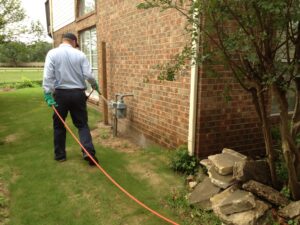
Here’s how it works. A technician trenches around the exterior perimeter of your home and applies a liquid termiticide into the soil.
This creates a continuous chemical barrier that kills termites on contact as they try to move between the soil and your foundation. Some products also have a transfer effect – termites that contact the treated zone carry the chemical back to the colony, accelerating elimination.
The termite treatment cost per linear foot for liquid barriers in Utah typically runs $3 to $8. A 150-linear-foot foundation, which is common for mid-size homes in Spanish Fork and Springville, would cost approximately $450 to $1,200 for a standard application.
Liquid barriers provide immediate protection and typically last five to eight years before reapplication is needed. They’re ideal for active infestations where fast results matter.
How Much Do Termite Bait Stations Cost in Utah?
Termite bait station installation in Utah typically costs $800 to $3,000 or more, depending on the number of stations and the size of the property. Annual monitoring after installation runs $200 to $400 per year.
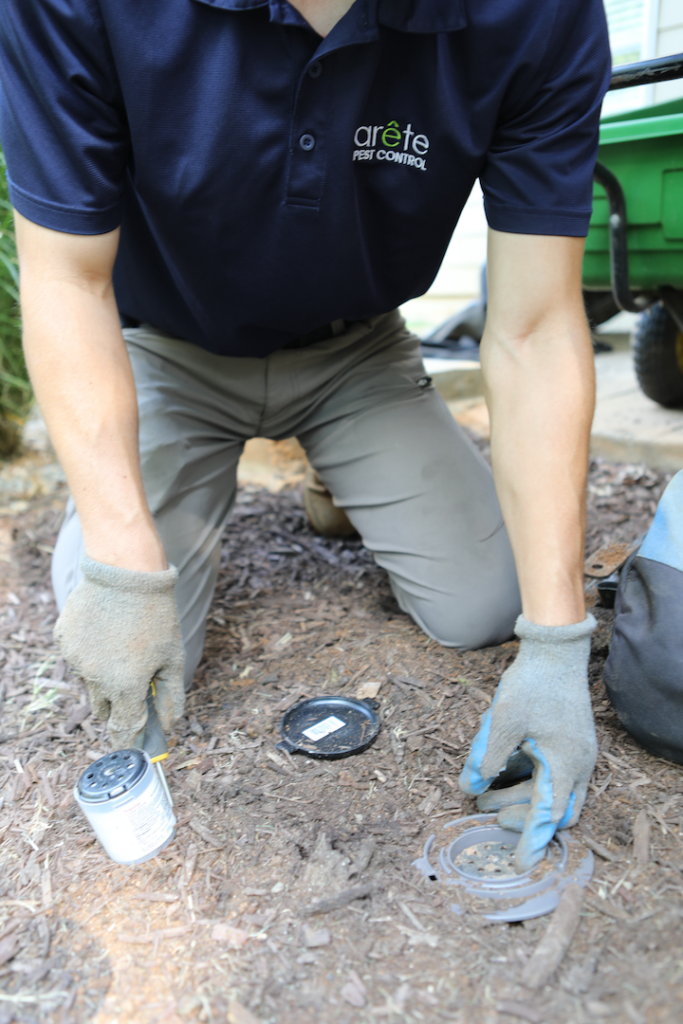
Bait stations work differently than liquid barriers. Stations are placed in the ground at regular intervals around your home’s perimeter. When termites find the station, they feed on a slow-acting bait and carry it back to the colony. Over weeks, the bait eliminates the entire colony – including the queen.
Arete’s Pest+ Plan includes termite bait station installation and year-round monitoring for $70 per month as part of a bundled pest control plan. This is one of the most cost-effective ways to get continuous termite protection without paying a large lump sum upfront.
Bait stations are the better choice for prevention and long-term monitoring. If you don’t currently have termites but want to make sure they never gain a foothold, a bait station system is the smart investment – especially in areas with known subterranean termite activity like the benches of Utah County.
How Much Does Termite Treatment Cost in Utah?
Termite infestations are less common in Utah than subterranean species, but they do occur – especially in older homes or in wood that was shipped from warmer climates. Treatment costs range from $1,000 to $2,500 or more.
Termites live inside the wood they consume, not in the soil. That means liquid soil barriers won’t reach them. Treatment options include localized injection of termiticide directly into infested wood, heat treatment of affected areas, or in severe cases, whole-structure fumigation.
Fumigation is the most expensive option and rarely necessary in Utah. Localized treatments are far more common and significantly more affordable.
Your technician will identify the scope of the infestation during the inspection and recommend the most targeted approach.
Residential vs. Commercial Termite Treatment Costs in Utah
Residential termite treatment costs in Utah typically fall between $500 and $2,500 for most single-family homes. The majority of residential jobs in our service area are completed in one visit, with follow-up monitoring scheduled quarterly or annually.
Commercial termite treatment is a different scope. Office buildings, retail spaces, multi-unit housing complexes, and warehouses have larger footprints, more complex foundation systems, and stricter compliance requirements.
Commercial termite control pricing starts higher and scales based on square footage, building use, and the level of documentation required.
If you manage commercial property along the Wasatch Front, Arete provides customized termite protection plans with dedicated account management. Our technicians understand the difference between treating a 2,000-square-foot home in Pleasant Grove and a 15,000-square-foot commercial building in Draper.
Add-On Costs: Repairs, Follow-Ups, and Monitoring Plans
The treatment itself is only part of the total investment. Here’s what else you should budget for.
Termite damage repair. If termites have compromised structural wood, drywall, or flooring, repair costs are separate from treatment. Minor repairs start around $250. Structural work involving load-bearing members, subfloor replacement, or joist sistering can run $1,500 to $3,000 or more. The earlier you catch an infestation, the less you’ll spend on repairs.
Follow-up visits. Most professional treatments include at least one follow-up inspection at no extra cost. Arete’s service plans include free re-treatments if termite activity returns between scheduled visits, so you’re never paying twice for the same problem.
Annual monitoring and termite bonds. A termite bond is essentially a warranty. It guarantees that if termites return within the coverage period, re-treatment is included at no charge. Some bonds also cover repair costs. Annual bond pricing in Utah runs $150 to $400 per year. This is one of the smartest ongoing investments a homeowner can make, especially in areas with documented subterranean termite pressure.
Wood destroying insect reports (WDIR). If you’re selling your home, a buyer’s lender may require a WDIR before closing. This is a separate service that costs $75 to $150 and documents the presence or absence of wood-destroying organisms on the property.
One-Time Treatment vs. Termite Protection Contracts
Should you pay for a single treatment and walk away, or invest in an ongoing protection plan? Here’s how the math works.
One-time treatment costs $500 to $2,500 depending on the method and scope. You get the immediate problem resolved, but there’s no safety net if termites return next season. You’ll pay full price again for retreatment.
Protection contracts spread the cost over monthly payments and include ongoing monitoring, re-inspections, and re-treatment coverage. Arete’s Pest+ Plan at $70 per month includes quarterly pest control plus termite bait station monitoring – which works out to $840 per year for comprehensive home protection. If termites return, treatment is covered. No surprises.
For most homeowners along the Wasatch Front, a protection contract is the better value. Subterranean termites don’t give up after one treatment.
Colonies can rebuild, and new swarms can move in from neighboring properties. A monitoring system catches new activity early, before it becomes another expensive treatment.
Arete also offers up to $150 in savings when you bundle termite protection with general pest control and mosquito treatments. The Pest Elite+ Plan at $118 per month covers all three – pests, termites, and mosquitoes – and includes a 100% satisfaction guarantee.
Ready to protect your home from termites? While averages give you an idea, every home in Utah County and the Salt Lake City area is unique.
Contact Arete Pest Control today for a free, professional termite inspection and a personalized quote tailored to your specific needs.
Our team provides licensed termite inspections, treatment, and monitoring across Orem, Lehi, Vineyard, American Fork, Mapleton, Spanish Fork, Sandy, Draper, Saratoga Springs, Springville, Pleasant Grove, Provo, Highland, Alpine, Cedar Hills, Lindon, Salem, South Jordan, Herriman, Bluffdale, and all of Utah County and Salt Lake County.
Schedule your free termite inspection online today.
FAQs
What Happens If Termites Return After Treatment?
If you’re on an Arete protection plan, we come back and re-treat at no additional charge. That’s the entire point of a termite bond or annual monitoring plan – it guarantees coverage if termites reappear.
Without a plan, you’d pay for a second full treatment out of pocket.
Are Bait Stations More Expensive Than Liquid Barrier Treatments?
Upfront, yes. Bait station installation typically costs more than a single liquid barrier application. However, bait stations provide continuous monitoring and colony elimination over time.
When you factor in the cost of re-applying liquid treatments every five to eight years, bait stations often cost less over the life of your home.
How Often Are Follow-Up Visits Needed?
For bait station systems, technicians check and refresh stations every quarter. After a liquid barrier treatment, an annual inspection is recommended to confirm the barrier is intact and no new activity has developed.
Arete’s protection plans include these follow-ups at no extra cost.
Do Warranties or Protection Plans Add to the Cost?
Yes, but they save you money in the long run. A termite bond adds $150 to $400 per year, which is a fraction of what a second treatment would cost.
Think of it the same way you think about homeowners’ insurance – it’s a small ongoing investment that protects against a much larger expense.
How Long Does Termite Treatment Last in Utah?
Liquid barrier treatments typically last five to eight years depending on soil conditions and the product used. Bait station systems provide protection for as long as they’re maintained and monitored.
Annual protection plans ensure that regardless of treatment type, your home stays covered without gaps.
Is Termite Treatment Covered by Homeowners Insurance in Utah?
In most cases, no. Standard homeowners insurance policies in Utah do not cover termite damage or treatment. Insurance companies classify termite damage as a maintenance issue, not a sudden event.
That’s one more reason proactive prevention and a termite bond matter – they’re your real financial safety net against termite damage.
Can I Treat Termites Myself to Save Money?
DIY termite products exist, but they rarely solve the problem. Store-bought sprays and foam treatments reach surface-level activity, not the colony underground.
Subterranean termite treatment requires professional-grade termiticides applied at precise depths and concentrations – work that demands licensed equipment and training. A failed DIY attempt often makes the problem worse by scattering the colony, making professional treatment harder and more expensive when you eventually call for help.