

Mosquitoes are so bad in Dacula because Georgia’s warm temperatures, heavy rainfall, and humid summers create one of the longest and most productive mosquito breeding seasons in the country.
Add in the standing water, shaded yards, and dense vegetation common across Gwinnett County, and you have ideal conditions for mosquitoes to thrive from early spring well into fall.
This guide explains why mosquito pressure is so high in the Dacula area, what attracts them to your yard, which species are most common locally, the health risks they pose, and how you can reduce breeding around your home.
Why Mosquito Pressure Is So High in the Dacula Area
Mosquito problems vary widely across the United States. Dacula sits in one of the more challenging zones. Two factors drive this: climate and geography. Both work together to support large, persistent mosquito populations.
Georgia’s Climate Supports a Longer Mosquito Season
Mosquitoes are most active when temperatures stay between 70 and 90 degrees. In Dacula, that range covers most of the year. Spring activity typically begins in March, peaks in summer, and continues into October.
Warm overnight temperatures matter even more than daytime highs. Mosquito larvae develop faster when nights stay above 60 degrees, which is the case for most of the Georgia summer.
This means colonies can complete their full life cycle in as little as 7 to 10 days. Populations grow quickly when conditions stay favorable.
Heavy Rainfall and Humidity Keep Populations Growing
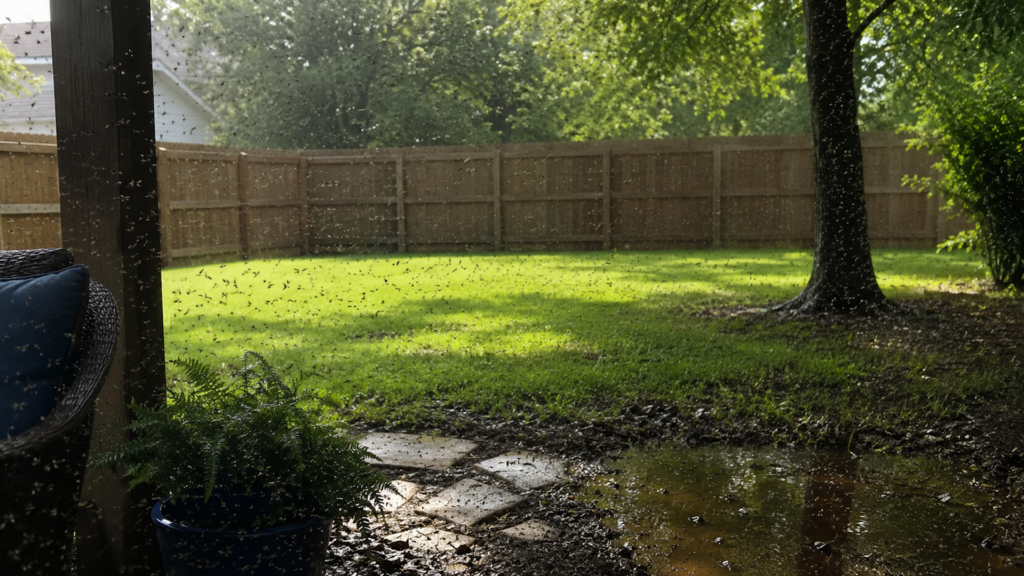
Dacula averages more than 50 inches of rain per year, with frequent thunderstorms from late spring through summer. Each rain event refreshes standing water sources and creates new ones.
High humidity also extends adult mosquito lifespan. Adult females need moisture in the air to survive long enough to lay multiple batches of eggs. Georgia’s humidity makes this easy, which is one reason the same yard can produce mosquitoes week after week even after you eliminate visible breeding sites.
What Attracts Mosquitoes to Your Yard?
Mosquitoes do not appear randomly. They are drawn to specific conditions, most of which are within your control. Understanding what attracts them helps you identify the trouble spots on your own property.
Standing Water Is the Primary Breeding Source
All mosquitoes need standing water to reproduce. Female mosquitoes lay eggs on or near water, and the larvae develop in the same water before emerging as adults. According to the University of Georgia Cooperative Extension, even a tablespoon of water is enough for some species to breed.
Common breeding sources around Dacula homes include clogged gutters, plant saucers, birdbaths, kiddie pools, tarps with sagging pockets, old tires, wheelbarrows, trash can lids, and corrugated drainage pipes. Any container that holds water for more than a few days can produce mosquitoes.
Shaded Vegetation and Overgrown Landscaping
Adult mosquitoes rest in cool, shaded areas during the heat of the day. Dense shrubs, ivy beds, tall grass, and the underside of decks all provide ideal harborage. The more shaded vegetation you have, the more daytime resting spots are available.
This is why yards with mature trees and heavy landscaping often have noticeably worse mosquito problems than open, sunny lots, even when standing water is controlled.
Drainage Problems and Yard Features That Hold Water
Some breeding sources are harder to see. Low spots in the lawn that puddle after rain, French drains that have clogged with debris, and downspouts that pool water near the foundation all create hidden breeding habitats.
If your yard stays soggy for days after a rainstorm, that drainage issue is also a mosquito issue. Addressing the grading or drainage solves both problems.
Which Mosquito Species Are Most Common in Gwinnett County?
Georgia is home to 63 mosquito species, but only a handful cause most of the trouble around homes. In the Dacula area, two species are the main culprits.
The Asian Tiger Mosquito
The Asian tiger mosquito (Aedes albopictus) is the most aggressive daytime biter in Gwinnett County. It is small, black, with distinctive white stripes on its legs and body.
Unlike many mosquito species that feed at dawn and dusk, Asian tiger mosquitoes bite throughout the day, especially in shaded areas. They breed in artificial containers, which means they thrive in residential neighborhoods. If you get bitten during a backyard cookout in July, it is almost always this species.
The Southern House Mosquito
The southern house mosquito (Culex quinquefasciatus) is the most common nighttime biter in the area. It is brown, medium-sized, and active from dusk through the early morning hours.
This species breeds in stagnant, organic-rich water such as storm drains, septic seepage areas, and water that sits in containers for weeks. It is also the primary carrier of West Nile virus in Georgia, which makes it important from a public health perspective.
Mosquito Species at a Glance
| Species | When It Bites | Where It Breeds | Disease Risk |
| Asian tiger mosquito | Daytime; shaded areas | Containers, tires, gutters | Lower; nuisance biter |
| Southern house mosquito | Dusk to dawn | Stagnant water, storm drains | Primary West Nile vector |
What Health Risks Do Mosquitoes Carry in Georgia?
Most mosquito bites in Dacula cause only itchy welts. But mosquitoes are also vectors for several serious diseases that show up in Georgia each year. The Centers for Disease Control and Prevention tracks mosquito-borne illness across the country, and Georgia consistently reports cases.
West Nile Virus
West Nile is the most common mosquito-borne disease in Georgia. It is transmitted primarily by the southern house mosquito. Most infected people show no symptoms, but a smaller percentage develop flu-like illness, and a small number develop serious neurological symptoms.
Peak West Nile transmission in Georgia runs from mid-August through mid-September. This is when nighttime mosquito control matters most.
Eastern Equine Encephalitis
Eastern equine encephalitis (EEE) is rare but more dangerous than West Nile. It causes brain inflammation and has a high fatality rate when humans are infected. Georgia reports occasional cases, mostly in horses, but human cases do occur.
EEE risk is highest in areas near freshwater swamps and wooded wetlands. Homes adjacent to undeveloped land may have higher exposure than homes in built-out neighborhoods.
Other mosquito-borne illnesses tracked in Georgia include La Crosse encephalitis and, less commonly, travel-related cases of Zika and dengue.
How to Reduce Mosquito Breeding Around Your Dacula Home
You cannot eliminate every mosquito in Dacula. The species are native to the area and breed in habitats well beyond your property line. But you can dramatically reduce the population in your own yard. The EPA recommends an integrated approach that combines source reduction, larval control, and adult mosquito management.
Eliminate standing water weekly. Walk your yard once a week during mosquito season. Dump out anything holding water: plant saucers, kids’ toys, buckets, tarps, wheelbarrows. Even small amounts produce mosquitoes.
Clean gutters and downspouts. Clogged gutters are one of the most common hidden breeding sources in Dacula. Clear them at least twice a year and check that downspouts drain at least 4 feet from the foundation.
Fix drainage problems. Regrade soggy areas, repair clogged French drains, and make sure low spots in the lawn drain within 48 hours of rain.
Trim back vegetation. Cut overgrown shrubs, mow grass regularly, and thin dense ivy beds to reduce daytime mosquito harborage.
Use larvicide where water cannot be removed. EPA-approved mosquito dunks can be placed in water features, rain barrels, or drainage areas where water has to stay. These products kill larvae without harming pets, fish, or wildlife when used as directed.
If mosquito pressure is severe despite these steps, professional mosquito control adds a barrier treatment that suppresses adult populations and creates a buffer between your yard and surrounding properties.
Frequently Asked Questions About Mosquitoes in Dacula
How long is mosquito season in Dacula, GA?
Mosquito season in Dacula typically runs from March through October, with peak activity from June through September. Mild winters can extend activity into November in warm years.
Can mosquitoes really breed in small amounts of water?
Yes. Some species, including the Asian tiger mosquito, can complete their entire life cycle in as little as a bottle cap of water. This is why even small overlooked containers matter.
Why are mosquitoes worse in some yards than others?
Yards with more standing water, denser vegetation, more shade, and poorer drainage produce more mosquitoes. Mosquitoes also do not fly far, often staying within 100 to 300 yards of their breeding site, so neighborhood conditions matter too.
Do mosquitoes in Georgia carry serious diseases?
Yes. West Nile virus is reported in Georgia every year. Eastern equine encephalitis is less common but more severe. Most bites do not transmit disease, but the risk is real enough that the CDC and Georgia Department of Public Health track cases statewide.
What time of day are mosquitoes most active in Dacula?
It depends on the species. Asian tiger mosquitoes bite throughout the day, especially in shaded areas. Southern house mosquitoes are most active at dusk and through the night. This is why mosquito problems often span the full day in Gwinnett County.
Should I hire a professional or handle this myself?
If you have minor mosquito activity and can identify and eliminate breeding sources, DIY measures may be enough. If you have persistent mosquito pressure, large outdoor gatherings to protect, or live near wooded or wetland areas, professional treatment provides results that DIY methods cannot match.
Arete Pest Control serves homeowners across Dacula and the surrounding pest control in Gwinnett County area. To schedule an assessment, contact Arete Pest Control for a free inspection.