
Wasps and Hornets in Georgia
Overview of Wasps and Hornets in Georgia
Wasps and hornets in Georgia are a significant concern for homeowners, particularly during the warmer months when these pests actively build nests around homes, gardens, and outdoor structures. These stinging insects are highly aggressive when defending their colonies, leading to painful stings and even severe allergic reactions.
Because of the risks they pose to families and pets, professional pest control is essential for safely eliminating nests and preventing future infestations.
For information on other stinging or biting pests, visit our full Pest Library.
Common Wasps and Hornets in Georgia
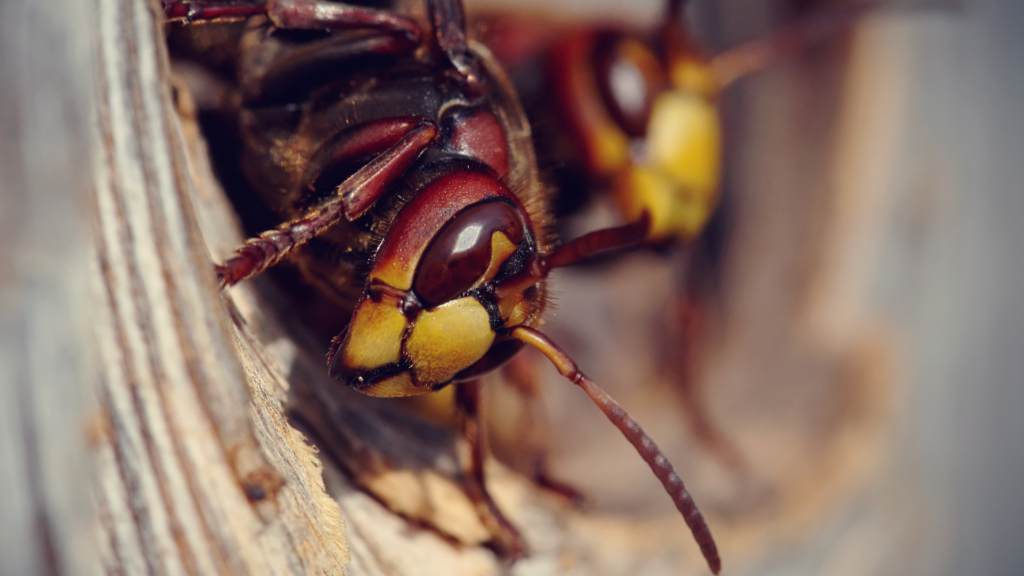
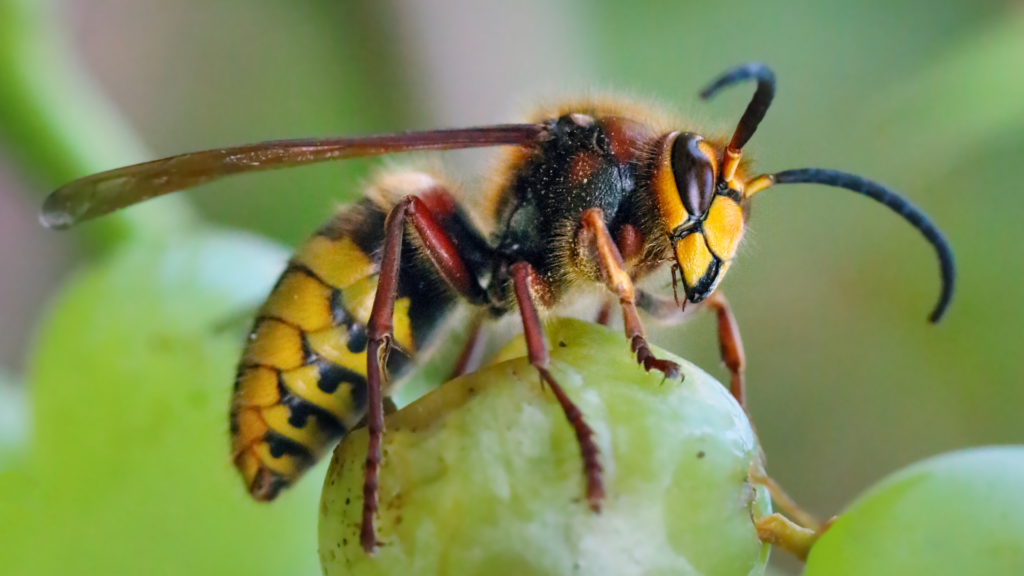
Several wasp and hornet species in Georgia can become problematic around homes:
Yellowjackets:
- Small (about 1/2 inch long)
- Bright yellow and black bands
- Extremely aggressive, especially when defending underground nests
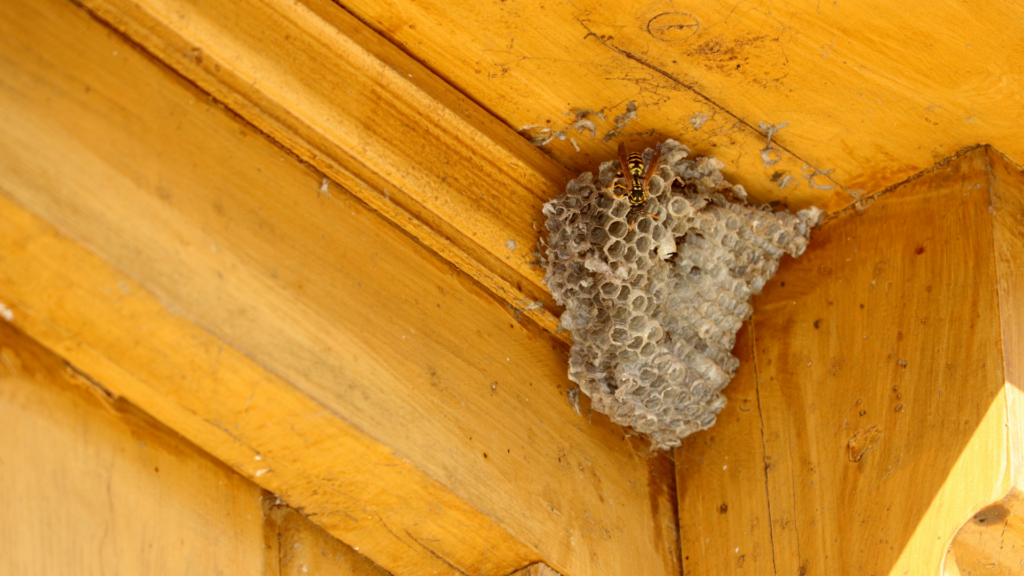
Paper Wasps:
- Slender brownish bodies with yellow markings
- Build open, umbrella-shaped nests under eaves, porches, and decks
- Less aggressive than yellowjackets, but still capable of stinging when disturbed
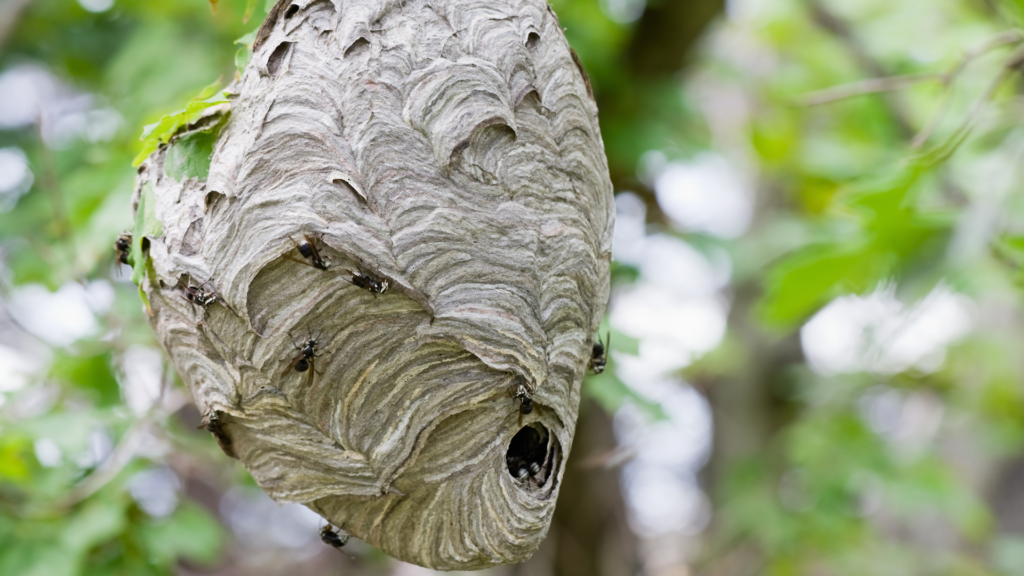
Bald-faced Hornets:
- Black with white facial markings
- Larger (up to 3/4 inch long)
- Construct enclosed gray paper nests high in trees, shrubs, or buildings
- Extremely aggressive and territorial
Like spiders in Georgia, wasps and hornets often nest in quiet, sheltered areas around the home where they can go unnoticed until disturbed.
Where You’ll Find Them
Wasps and hornets tend to build nests in protected spaces with easy access to food and water:
- Under eaves and rooflines
- Inside attics, garages, and sheds
- Beneath decks, patios, and porches
- In dense shrubs, trees, or bushes
- Underground burrows (especially yellowjackets)
Life Cycle of Wasps and Hornets
Wasps and hornets follow a seasonal life cycle:
- In early spring, fertilized queens emerge to build new nests
- Eggs hatch into workers who expand the nest and forage for food
- Colonies grow and reach peak size in late summer
- As fall approaches, workers die off and new queens overwinter
Georgia’s long, warm seasons allow colonies to grow larger than in colder climates, making early intervention key.
Wasp and Hornet Prevention Tips for Georgia Homes
To minimize your chances of a wasp or hornet infestation:
- Inspect eaves, attics, and decks regularly for nest activity
- Seal cracks and gaps in siding, soffits, and rooflines
- Keep trash cans tightly sealed and away from living areas
- Limit outdoor sugary drinks and ripe fruit exposure
- Trim trees and shrubs near home exteriors
- Use extra caution when mowing, trimming, or working near suspected nests
Early professional intervention is the safest and most effective option.
Frequently Asked Questions
Are wasps and hornets dangerous?
Yes. Their stings can cause serious allergic reactions, and aggressive species like yellowjackets may attack in large numbers when threatened.
How can I tell if I have a wasp or hornet nest?
Look for increased insect activity and visible nests under eaves, in shrubs, or inside outdoor structures.
Can I remove a wasp nest myself?
DIY removal is extremely risky. Professionals use safety gear and specialized treatments to remove nests safely and completely.
When are wasps and hornets most aggressive?
They are most aggressive in late summer and early fall when colonies are largest and food becomes scarce.
Professional Wasp and Hornet Control in Georgia
Arete Pest Control provides expert wasp and hornet control services in Georgia, ensuring safe removal and long-term prevention.
Our services include:
- Comprehensive inspections to identify visible and hidden nests
- Safe, professional nest removal with protective equipment
- Targeted treatments to deter future nesting
- Seasonal protection programs for high-risk properties
Don’t attempt nest removal on your own. Yellowjackets and bald-faced hornets can attack in swarms, causing serious injury.
Visit our Pest Library to explore how we treat other pests impacting Georgia homes, or call Arete Pest Control today for fast, professional wasp and hornet removal.